Malachite Sunbird: East Africa’s Largest and Most Spectacular Long-tailed Sunbird
The malachite sunbird is one of East Africa’s most magnificent highland birds. The breeding male’s entirely iridescent emerald-green plumage, combined with the long tail streamers that extend 10 to 12 centimetres beyond the body, creates one of the most striking bird profiles in the region. The species inhabits highland meadows, montane scrub, and forest edges at high altitudes where its preferred flowering plants provide the nectar it depends on for much of its diet.
The combination of brilliant green plumage and the acrobatic feeding behaviour at flowering plants makes the malachite sunbird a photographic priority for birders visiting East Africa’s mountain destinations. The species is relatively common at appropriate highland sites and provides close, prolonged views when it feeds at accessible flowering shrubs in suitable habitat.
Identification
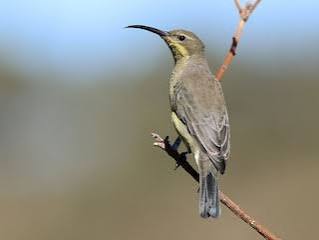
The breeding male malachite sunbird is the largest sunbird in East Africa. He measures 25 centimetres including the long tail. The entire plumage is iridescent emerald-green that appears almost luminous in direct highland sunlight. Yellow pectoral tufts are visible at the sides of the breast when the bird spreads its wings during territorial display.
The non-breeding male is considerably duller. The iridescent green is reduced to patches on the face, breast, and wings. The remainder of the plumage is brown and streaked, similar to the female plumage. The long tail is retained in non-breeding males, which distinguishes them from females even in dull plumage.
Feeding and Territorial Behaviour
Malachite sunbirds feed primarily on nectar from a range of highland flowering plants. Red-hot pokers of the genus Kniphofia are among the most important nectar sources. The birds probe their long bills deep into the tubular flowers to reach the nectar pool at the base. They hover briefly while probing, then move to the next flower along the spike in a rapid feeding sequence.
Males defend flowering plants aggressively against other sunbirds and against insects that attempt to access the nectar. A territory centred on a productive clump of flowering plants is defended by constant aerial chasing and loud calling from exposed perches on the highest available stem above the territory.
Furthermore, malachite sunbirds are important pollinators of many highland plant species. The pollen deposited on the bird’s head and bill as it probes each flower is transferred to the next flower visited. This pollination service is so important to certain highland plant species that the plants show red colouration specifically tuned to attract sunbirds rather than insects.
Where to See Malachite Sunbirds in East Africa
The malachite sunbird inhabits highland areas above approximately 1,500 metres altitude. Kenya’s Mount Kenya, the Aberdare Mountains, and the Cherangani Hills all provide excellent malachite sunbird habitat. The species is common in the montane forest edges and moorland zones of these mountain areas.
Tanzania’s Mount Kilimanjaro and the Ngorongoro Crater highland zones carry malachite sunbird populations at appropriate altitudes.
Uganda’s Rwenzori Mountains and the highlands of the Bwindi area carry malachite sunbirds in the upper forest and subalpine zones. These populations are part of the Albertine Rift’s distinctive highland bird community that includes several sunbird species found nowhere else in East Africa.
Plan Your Birding Safari
Malachite sunbird sightings require highland mountain destinations above 1,500 metres in Kenya, Tanzania, or Uganda. The species is most conspicuous during the flowering season when males defend productive nectar plants and are highly visible from a distance.
Kenya’s Aberdare highlands and Mount Kenya’s Sirimon or Naro Moru routes provide accessible malachite sunbird habitat within easy reach of the Laikipia or central highlands safari circuit without requiring a full mountain climb.
African Wild Trekkers includes highland mountain destinations in East Africa birding safari itineraries where malachite sunbirds and other montane species are reliable targets. Contact us to plan a safari that explores East Africa’s highland bird community alongside the main savanna wildlife experience.