Augur Buzzard Africa: East Africa’s Most Commonly Seen Highland Raptor
The augur buzzard ranks among East Africa’s most frequently seen large raptors. It dominates the skies above highland areas in Kenya, Ethiopia, and Uganda. The bird uses warm air currents to soar above escarpments, roads, and open landscapes.
Travellers often spot augur buzzards during road journeys through East Africa’s highlands. Many birds sit on roadside poles or circle high above the valleys. Their large size, loud calls, and tolerance of people make them easy to notice.
The augur buzzard holds the same familiar status in East Africa that the common buzzard holds in Europe. Birdwatchers can identify it from a moving vehicle because of its size and unique markings.
Identification
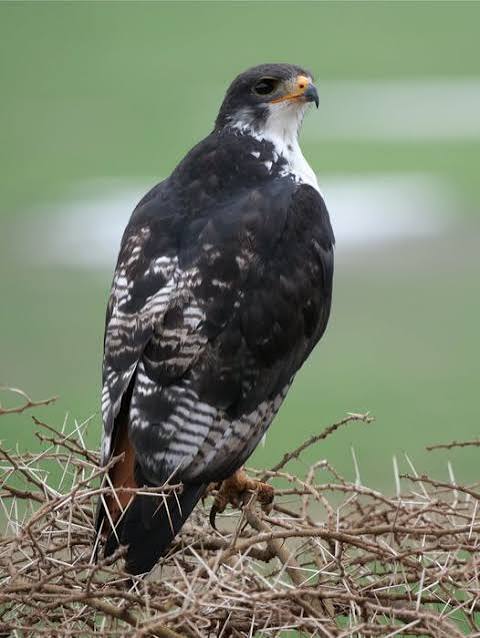
The typical augur buzzard shows white underparts and a bright rufous-red tail. The red tail provides the best identification feature. The bird also has dark grey-brown upperparts and a dark head.
During flight, the bird shows white underwings with dark carpal patches. The contrast creates a clear pattern that birdwatchers can recognize from a distance. The rufous tail remains visible during soaring flight.
Some populations, especially in Ethiopia and northern Kenya, produce dark morph birds. These birds show completely dark plumage on the underside. Standard and dark morph birds may appear in the same region.
Some individuals show mixed plumage between the two forms. These birds may confuse beginners. However, the rufous tail remains the most reliable feature for identification.
Behaviour and Habitat
Augur buzzards prefer highland environments above 1,200 metres. They inhabit escarpments, mountain slopes, forest edges, and open plateaus. They thrive between 1,500 and 3,000 metres where rising air currents support their hunting style.
The birds begin soaring when morning temperatures create strong thermals. They use these air currents to gain height before gliding across the landscape. Their wings remain broad and steady during flight.
Augur buzzards hunt small mammals, rodents, hyraxes, lizards, insects, and sometimes snakes. They search for prey while soaring above open ground. They also hunt from roadside poles and other elevated perches.
When they locate prey, they dive quickly toward the ground. Their sharp eyesight helps them detect movement from great distances.
Where to See Augur Buzzards in East Africa
Kenya’s central highlands offer some of the best opportunities to see augur buzzards. The Rift Valley escarpments provide ideal habitat for the species. The Nairobi to Nakuru road passes through excellent augur buzzard areas.
Travellers often spot these birds without leaving the vehicle. The Aberdare Mountains and Mount Kenya foothills also support many breeding pairs.
Ethiopia’s Bale Mountains and Semien Mountains hold strong populations. Birdwatchers can find them around high-altitude grasslands and rocky slopes.
Uganda’s highland regions also support augur buzzards. The Rwenzori foothills and Kigezi Highlands provide regular sightings. Visitors exploring these areas often see them above valleys and mountain roads.
Tanzania offers sightings around the Ngorongoro Highlands. The crater rim and Olmoti areas provide excellent viewing opportunities. Birds often circle above the crater when afternoon thermals develop.
Plan Your Birding Safari
Augur buzzards provide easy sightings on many East African safaris. Travellers do not need special equipment or long walks to find them. Highland routes in Kenya, Uganda, and Tanzania offer frequent encounters.
Photographers can search for dark morph birds in Ethiopia and northern Kenya. These birds create a striking contrast compared with the common pale-bellied form found across much of East Africa.
A highland birding safari offers excellent chances to photograph this impressive raptor in its natural environment.
African Wild Trekkers designs East Africa safari itineraries through highland areas where the augur buzzard is a daily raptor sighting alongside the less common highland eagle and falcon species. Contact us to plan a safari that covers East Africa’s full raptor diversity from the lowland savanna to the highland escarpment zone.