African Civet Facts: The Large Nocturnal Predator of the African Night
The African civet looks like a cross between a cat, a raccoon, and a hyena. It is none of these things. It belongs to its own family—Viverridae—and it is one of the most distinctive nocturnal mammals on the continent. Safari visitors who run night drives often encounter it. Those who look at it closely rarely forget it.
What Is the African Civet?
The African civet, Civettictis civetta, is the largest member of the Viverridae family in Africa. This family includes genets, linsangs, and binturongs. Viverrids are an ancient group that diverged from other carnivores over 50 million years ago. The African civet is the sole member of its genus.
An adult African civet weighs between 7 and 20 kilograms. It stands about 40 centimeters at the shoulder. Body length reaches up to 85 centimeters, with a thick, tapering tail adding another 40 centimeters. This makes the civet considerably larger than most people expect on a first encounter.
Physical Features and Unique Markings
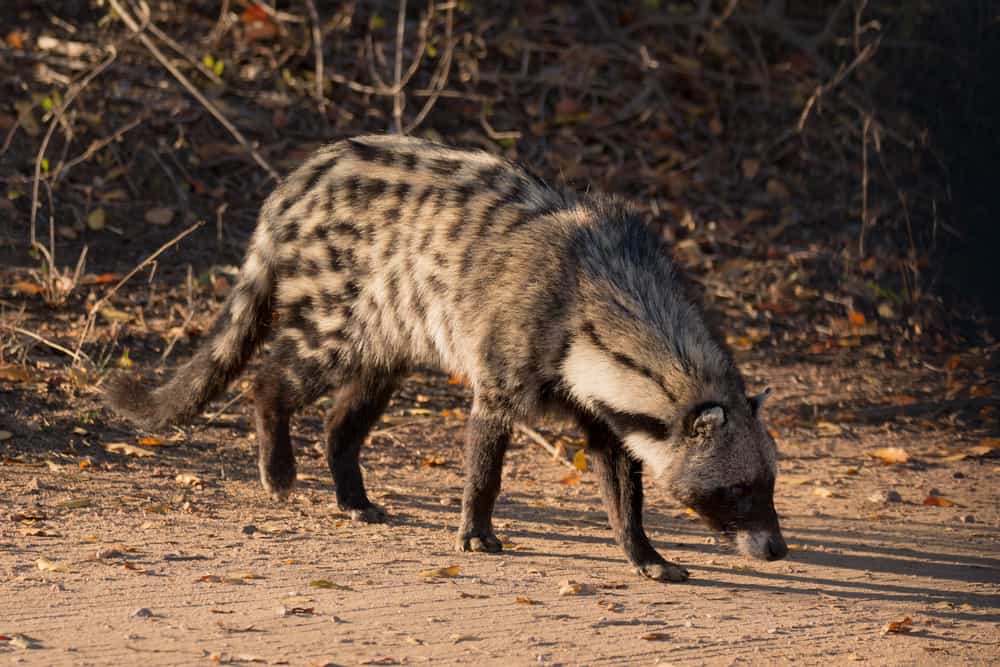
The African civet’s coat is grey with bold black spots and stripes that form a unique pattern on each individual. The legs, face, and chest are dark, almost black in some animals. A black mask covers the face around the eyes. A crest of dark hair runs from the nape to the tail. The civet erects this crest when threatened, appearing significantly larger.
The face is low-slung and broad. The nose is flat and pig-like. The eyes are large and amber-toned for night vision. The ears are short and rounded—unlike the tall ears of genets and mongooses. The overall impression is of a heavy, powerful animal moving with surprising quiet through dense vegetation.
The Civet’s Diet: An Extraordinary Generalist
The African civet eats almost anything it encounters. Its diet includes small mammals, birds, reptiles, frogs, insects, carrion, eggs, wild fruits, and fungi. It crushes millipedes, beetles, and other armored insects with its powerful jaws. It eats toxic prey items that most carnivores avoid. Certain toxic toads, millipedes that produce cyanide, and plants with strong defensive chemicals cause it no apparent harm.
This dietary flexibility lets the civet thrive in diverse habitats. It is not a specialist. It fills its stomach with whatever the landscape offers each night. A civet moving through riparian forest one hour may cross open grassland hunting rodents the next.
Civetone and the Perfume Industry
The African civet possesses large perineal glands that produce a waxy, musky secretion called civetone. This substance communicates territorial information to other civets. It carries detailed chemical signals about sex, age, and reproductive status.
For centuries, people collected civetone from captive civets and used it as a fixative in perfume production. It extended the life of fragrance compounds. Ethiopia was a major civetone-producing country. Today synthetic alternatives have replaced natural civetone in most perfumes. Wild civets retain their secretion glands as an entirely natural social tool.
Habitat and Range in East Africa
The African civet lives across sub-Saharan Africa wherever forest, riverine vegetation, or dense bush provides daytime shelter. It avoids open treeless savanna and true desert. In East Africa it is widespread throughout Uganda, Rwanda, Kenya, and Tanzania.
Uganda’s forests and forest edges hold strong civet populations. Rwanda’s Nyungwe Forest and the Akagera wetlands both support them. In Kenya, highland forests, Aberdare woodland, and riparian strips along rivers shelter civets. In Tanzania, Selous, Mahale, and Udzungwa Mountains all have civets present.
The African Civet’s Extraordinary Dietary Tolerance
The African civet has an unusually high tolerance for toxic compounds. It eats millipedes that secrete hydrogen cyanide and eats bitter, chemically defended fruits that other mammals reject. It consumes strychnos fruits and other toxic plant material without apparent ill effect. Researchers believe this tolerance evolved alongside a diverse, omnivorous diet that exposed the civet lineage to a wide range of plant and animal toxins over millions of years.
This ability makes the civet an important seed disperser for plants that produce toxic fruits. The civet eats the fruit, passes the seed intact in its feces, and deposits it at a distance from the parent plant. Strychnos trees across East Africa benefit from this relationship. The civet’s wide foraging range—several kilometers each night—means seeds land in diverse microhabitats. Its role as a seed disperser for toxic-fruited plants is probably underestimated in studies of forest and woodland regeneration.
African Civet Conservation Status
The African civet is classified as Least Concern by the IUCN. It is widespread across sub-Saharan Africa and adapts well to a range of habitats. In Uganda and Tanzania, populations remain healthy across most protected areas. The civet’s tolerance for forest edge, secondary vegetation, and moderate human disturbance gives it more resilience than specialist species.
The main threat is bushmeat hunting. Civets are hunted for food across parts of West and Central Africa. In East Africa this pressure is lower, but not absent. Civetone farming—keeping captive civets for musk extraction—still occurs in parts of Ethiopia at a small scale, though synthetic alternatives have reduced the economic incentive. Habitat loss removes the dense vegetative cover civets need for daytime shelter and reduces food availability over the long term.
Plan Your Safari
Night drives produce the most reliable civet sightings in East Africa. Civets walk slowly and predictably along paths, game trails, and dirt tracks. They often pause in the vehicle’s spotlight, giving extended views. Uganda’s Queen Elizabeth National Park, particularly the Mweya Peninsula tracks, produces excellent civet encounters on most night drives.
Kenya’s Aberdare National Park and several highland forest lodges have resident civets that visit at night. Tanzania’s Selous and Nyerere National Park also produce regular sightings on night drives through riverine vegetation.
African Wild Trekkers builds itineraries that include night drive permissions and experienced nocturnal wildlife guides. Contact us to plan a safari that gives the African civet—and the dozen other nocturnal mammals you will otherwise miss—the attention they deserve.