African Porcupine Facts: The Quilled Rodent That Deters Lions
The African crested porcupine is the world’s largest rodent in Africa and one of the continent’s most effective passive defenders. Its quills modified hairs up to 50 centimetres long have killed lions, leopards, and wild dogs that made the mistake of attacking one. Veterinary records from East Africa document lions with porcupine quills embedded deep in the face, paws, and throat infections from quill wounds cause some documented big cat deaths annually. The porcupine does not need speed, camouflage, or aggression to survive. It simply needs to be impossible to grab without consequences.
What Is an African Porcupine?
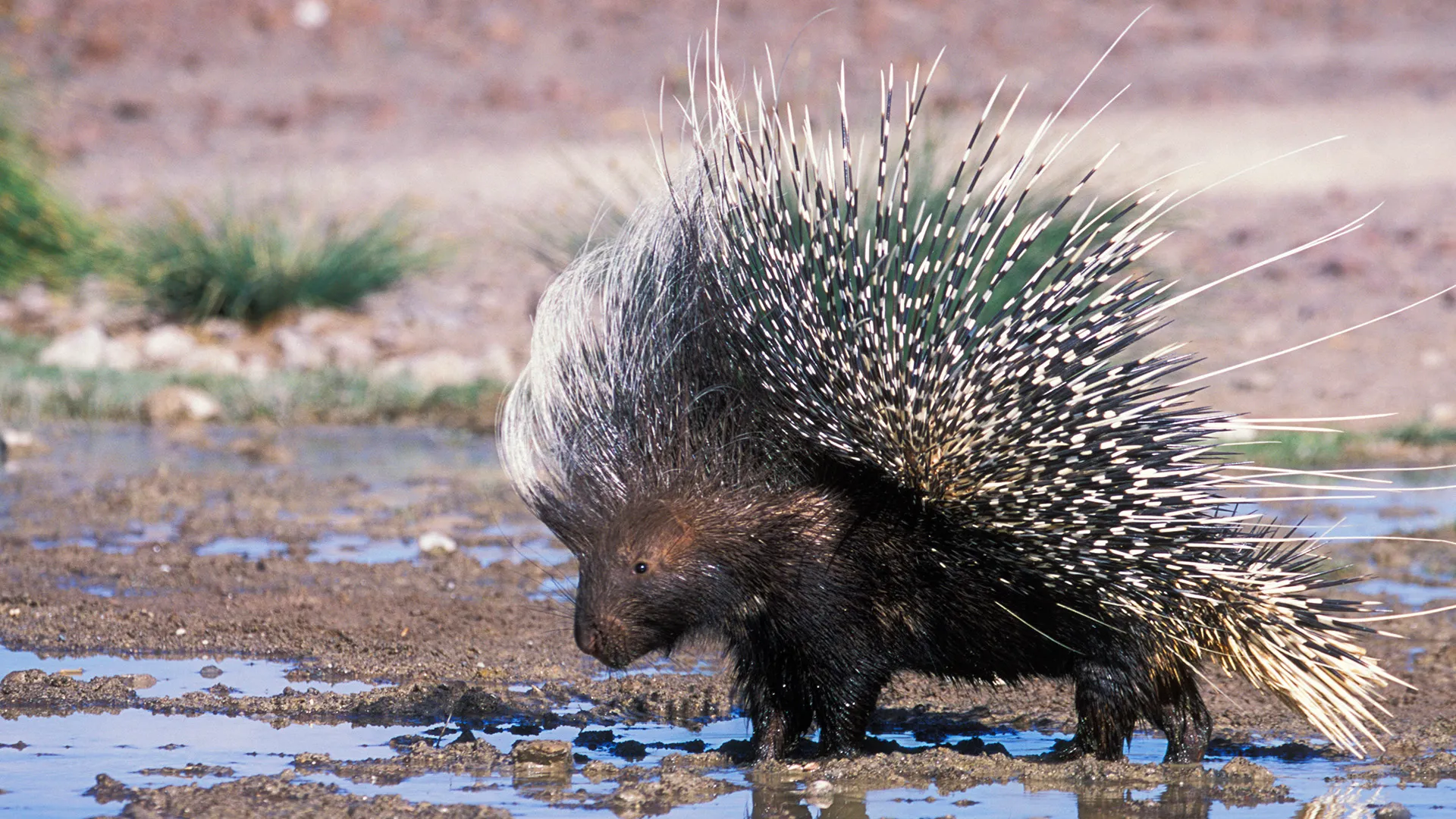
The African crested porcupine, Hystrix cristata, is the largest rodent in Africa and one of the largest rodents in the world. Adults weigh between 10 and 30 kilograms. Body length reaches 60 to 83 centimetres with a short tail of 8 to 17 centimetres. The body carries three types of modified hair: long, flexible white-and-black banded crest quills on the head and neck; shorter, thicker body quills of 20 to 30 centimetres with white and black bands; and the longest defensive quills hard, hollow, open-ended spines reaching up to 50 centimetres on the rump and tail. Short, hollow rattle quills on the tail base produce the characteristic rattling warning sound.
The face and underside are covered in coarse brown-black hair without quills. The legs are short and powerful for digging. The front teeth large orange incisors gnaw through roots, bark, and bone with considerable force.
Quill Defence: How It Works
The porcupine’s quill defence relies on two mechanisms warning and embedding. When threatened, the porcupine erects its quills, turns away from the threat, raises the rattle quills, and stamps its feet. This display makes the animal appear much larger and communicates clearly that an attack is inadvisable. If a predator persists and makes contact, the quills detach easily at the base they are not thrown or projected. A predator touching the porcupine’s rear drives the quills into its own skin by the force of the contact. The backward-facing barbs on each quill prevent easy removal.
Quills work into flesh over time rather than pulling out the barbed tip advances inward with each muscle movement. A quill entering a predator’s paw pad works steadily deeper with every step the predator takes. This makes embedded quills genuinely dangerous even weeks after the initial contact.
Nocturnal Lifestyle and Diet
African porcupines are strictly nocturnal. Daytime rest occurs in burrows either self-dug or taken over from aardvarks — in rocky outcrops, dense scrub, or clay soil banks. After dark they emerge and forage along predictable routes through their home range, covering 3 to 12 kilometres per night. The diet is entirely vegetarian: roots, bulbs, tubers, fallen fruit, bark, and agricultural crops. Gnawing on old bones to supplement calcium and phosphorus intake is a documented behaviour a porcupine cache of gnawed bones near a den is a reliable field sign of nearby activity.
Pair Bonds and Family Groups
African porcupines form long-term monogamous pair bonds unusual among rodents. A mated pair shares a burrow system and forages within a shared home range. Litters of one to four young are born after a gestation of approximately 112 days. Porcupine young are born with soft quills that harden within hours of birth. Both parents participate in rearing, and older offspring from previous litters sometimes remain as helpers a cooperative breeding system paralleling the wild dog and dwarf mongoose.
Plan Your Safari
Night drives in rocky terrain and woodland across East Africa produce African porcupine sightings. Kenya’s Laikipia conservancies, Tanzania’s Serengeti and Ruaha, and Uganda’s Queen Elizabeth all deliver encounters. The characteristic rattling quill sound — heard before the animal itself is visible — is the most reliable night drive indicator of proximity. A porcupine foraging slowly along a road verge, quills erect and rattle quills vibrating, gives an observation quality that a moving vehicle cannot improve. Stop immediately when one appears and watch quietly.
African Wild Trekkers designs East Africa safari itineraries that include night drive programmes across Kenya, Tanzania, and Uganda. Contact us to plan a safari capturing the full range of East Africa’s nocturnal wildlife.