Cooking Class Africa Safari: Learning Bush Kitchen Skills in East Africa
East Africa’s cooking traditions reflect the continent’s extraordinary diversity of cultures, climates, and available ingredients. A cooking class at a safari camp or community kitchen provides a direct connection to this tradition in a hands-on format that tasting a meal alone never delivers.
The experience begins with the ingredients. East Africa’s coastal Swahili cuisine uses coconut milk, tamarind, and Indian Ocean spices that came through Arab and Indian trading networks centuries ago. The inland highland cuisine uses fresh vegetables, beans, and maize grown at altitude in conditions that produce flavours dramatically different from the same crops grown at sea level.
Learning to prepare these dishes in the camp kitchen, beside the camp chef or a community cook, reveals the food culture of a place in a way that eating it on a restaurant table does not.
Camp Chef Skills and Bush Cooking Methods
Safari camp cooking operates under constraints that restaurant kitchens do not face. Water is limited and must be used efficiently. Fuel comes from gas or charcoal rather than from unlimited mains electricity. Temperature control in a camp oven requires experience and judgement that professional equipment calibrates automatically.
Despite these constraints, the best safari camp kitchens produce food of exceptional quality. The camp chef’s skill in producing multi-course meals under these conditions is genuinely impressive.
A cooking class with the camp chef reveals the specific techniques that make bush kitchen cooking work. The fireside ugali preparation, the slow-cooked nyama choma meat preparation, and the spiced lentil and bean dishes all have specific preparation methods that a morning in the camp kitchen teaches with immediate practical application.
Swahili Coastal Cuisine Classes
East Africa’s coast carries one of the continent’s most complex and refined food traditions. Swahili cuisine draws from Arab, Indian, Persian, and African cooking traditions that converged on the coast through centuries of Indian Ocean trade.
The result is a cuisine that uses spices with sophistication comparable to the best Indian regional cooking, combined with coastal ingredients from the Indian Ocean reef and the mangrove-lined estuaries.
A Swahili cooking class at a Zanzibar or Mombasa community kitchen introduces the spice blends that distinguish Swahili cooking from its component traditions. Pilau rice spiced with cardamom, cinnamon, cloves, and cumin. Mchuzi wa samaki fish curry made with freshly ground spice paste and coconut milk. Furthermore, the Stone Town spice tour that precedes a Zanzibar cooking class adds the agricultural context of where each spice comes from before it reaches the kitchen.
Community Cooking Classes
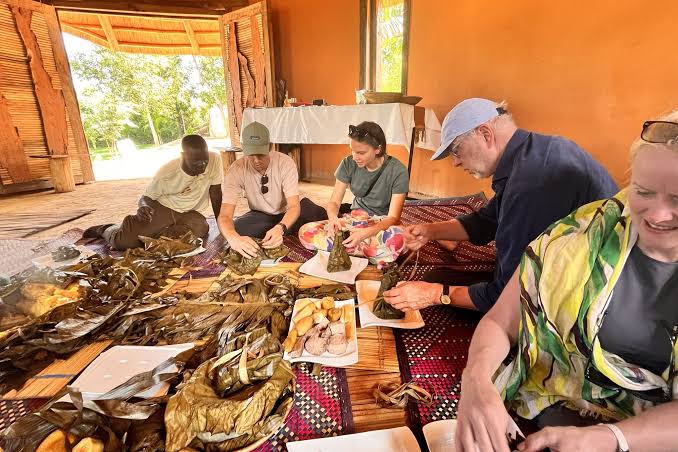
Community cooking classes in rural East Africa provide a different experience from camp chef demonstrations. A community class in a Maasai village, a Kikuyu highland farm, or a Lake Victoria fishing community kitchen introduces food preparation as it is practised in a domestic context rather than a catering context.
The quantities are domestic. The equipment is what the family owns. The techniques reflect generations of practical knowledge rather than professionally trained methods. The class is conducted in the community’s own kitchen space by the women or men who cook there daily.
Plan Your Safari
Safari camp cooking classes are available at most luxury and mid-range East Africa camps on request. They work best as an activity during the midday break when vehicle game drives are not running. Allow two to three hours for a meaningful cooking class that covers preparation, cooking, and eating the result.
Community cooking classes in specific cultural settings require advance arrangement through a guide with community relationships. Zanzibar’s community cooking class and spice tour combination operates as a half-day activity from Stone Town and pairs naturally with any Zanzibar coastal extension.
African Wild Trekkers includes cooking class experiences in East Africa safari itineraries at camps and community kitchens with genuine culinary depth. Contact us to plan a safari that combines wildlife encounters with East Africa’s rich and varied food culture.