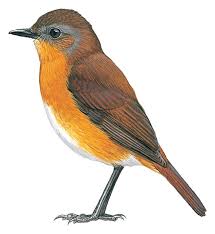
Equatorial Akalat: A Prized Albertine Rift Endemic of Uganda’s Forests
The equatorial akalat is one of the Albertine Rift’s most sought-after endemic bird species. The Albertine Rift — the chain of mountains, forests, and lakes along the Uganda-DRC border — holds the highest concentration of endemic bird species in all of Africa. The equatorial akalat is one of the species found only within this narrow geographic zone, making it a priority target for birders who travel to Uganda and Rwanda specifically to accumulate Albertine Rift endemics.
The species is a small, ground-dwelling robin that inhabits the floor and lower levels of montane forest. Its secretive behaviour and preference for dense undergrowth make it challenging to see well despite its presence at appropriate forest sites. However, persistent searching with an experienced local guide at the right forest sites produces reliable encounters for prepared birders.
Identification
The equatorial akalat is a compact, thrush-like bird measuring approximately 13 centimetres. The upperparts are warm brown. The underparts are orange-buff on the breast, shading to pale buff on the belly. The face shows a slight orange wash around the eye and on the cheek. The bill is slender and slightly down-curved. The tail is short and frequently cocked above the body line in the characteristic akalat posture.
The species is most easily confused with other small robin species in the Albertine Rift forest floor community. The combination of the warm brown upperparts, the orange-buff breast, and the short cocked tail provides the most reliable set of features for distinguishing it from the other small robins that share its forest floor habitat.
The call is a series of thin, high-pitched notes and a more musical song phrase delivered from low in the vegetation. The call is the primary initial detection tool for a species that moves quietly through dense undergrowth. Learning the call before visiting the forest dramatically increases detection success.
Habitat and Behaviour
The equatorial akalat inhabits the floor and lower understorey of mature montane forest, typically between 1,200 and 2,400 metres altitude. It moves through the leaf litter and low tangles with a series of hops and pauses, searching for small invertebrates in the debris and soil surface. The behaviour is typical of the akalat group methodical, quiet, and close to the ground.
The species rarely rises above 2 metres from the forest floor during normal foraging activity. This ground-hugging habit means that tall canopy viewing positions and high-angle binocular searches are ineffective for locating the species. Low-angle scanning through the undergrowth and patience at the forest floor level produce the best results.
Furthermore, the equatorial akalat responds well to pishing and playback of its call at appropriate sites. The bird’s territorial nature causes it to approach an apparent intruder calling from within its territory. This approach response provides the most reliable close observation opportunity for a species that otherwise remains within dense cover.
Where to See Equatorial Akalats
Uganda’s Bwindi Impenetrable Forest is the most accessible and most productive location for equatorial akalat encounters in East Africa. The forest’s montane section above 1,500 metres altitude holds good populations of this species alongside the other Albertine Rift endemics that make Bwindi one of Africa’s most important birding destinations.
The Kibale National Park forest in Uganda also carries equatorial akalat populations in its medium-altitude sections. The species is regularly encountered on the forest trails used by chimp trekking groups, where the slow movement of a guiding party through the undergrowth occasionally flushes birds into open view.
Rwanda’s Nyungwe Forest holds equatorial akalats in its montane sections. The forest’s network of walking trails provides guided access to the akalat’s habitat. Local Nyungwe guides with specific knowledge of the species’ territories produce the most reliable encounters within the forest’s dense understorey environment.
Plan Your Birding Safari
Equatorial akalat sightings require Uganda’s or Rwanda’s montane forest destinations. Bwindi Impenetrable Forest provides the most productive combination of equatorial akalat habitat with the gorilla trekking experience that attracts many visitors to the same forests.
A dedicated birding walk of 3 to 4 hours in appropriate Bwindi forest sections with an experienced local birding guide produces equatorial akalat encounters with high reliability during the right season. The combination of the gorilla trekking permit and an additional birding walk on the following day maximises the bird and mammal diversity of a Bwindi visit.
African Wild Trekkers includes Uganda’s Bwindi Forest in birding safari itineraries targeting Albertine Rift endemic species. Contact us to plan a Uganda birding safari that combines gorilla trekking with the comprehensive forest bird list that makes Bwindi one of Africa’s greatest birding destinations.