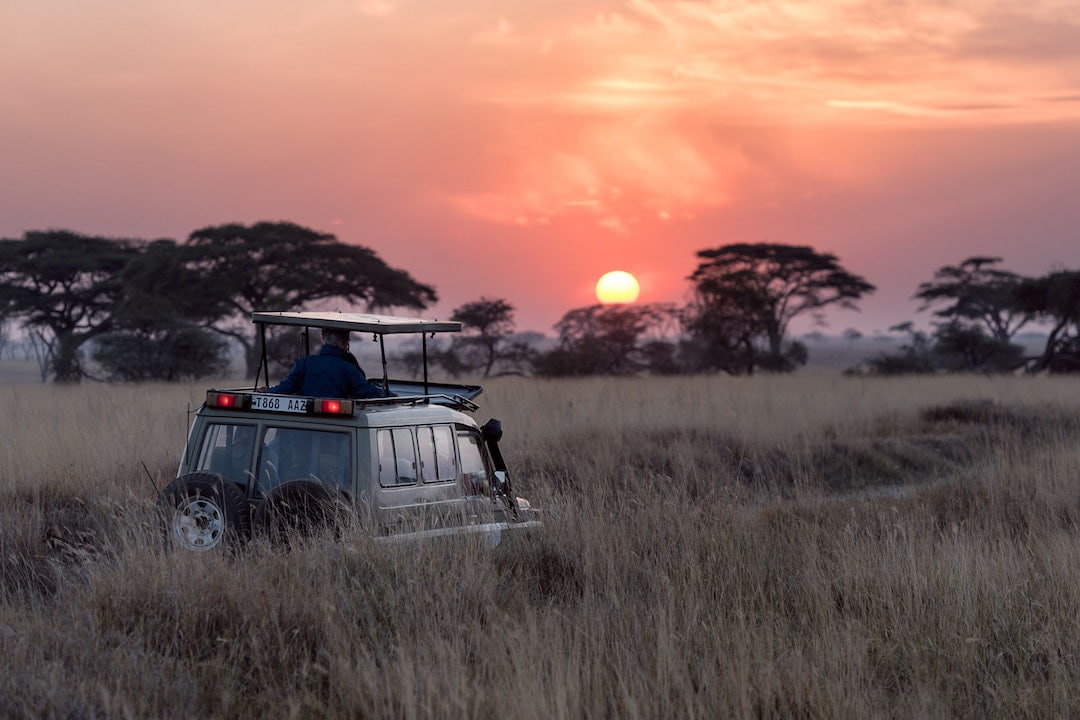
Tanzania and South Africa: Two Countries, Two Completely Different Safaris
Tanzania and South Africa sit at opposite ends of the African continent yet complement each other as a two-country safari itinerary in ways that surprise most travelers who experience both in sequence. Tanzania’s northern circuit delivers the Serengeti’s open plains wildlife and the Great Wildebeest Migration. South Africa adds the Kruger National Park’s remarkable accessibility, the Cape Winelands, and the Drakensberg Mountains. The contrast between the two countries’ landscapes, wildlife management approaches, and travel cultures makes a combined trip feel like two entirely different continents rather than a single Africa experience.
Why Tanzania and South Africa Complement Each Other
Different Ecosystems, Different Experiences
Tanzania’s Wild, Remote Character
Tanzania’s national parks maintain a deliberately remote character. Access to the Serengeti requires either a long overland drive from Arusha or a flight into a bush airstrip, and within the park, the distances between viewpoints and camps are vast. The management philosophy prioritizes ecological integrity over tourist convenience, which means fewer tarred roads, fewer facilities, and a stronger sense of genuine wilderness. When you sit watching a lion pride on the Serengeti plain with no sign of human infrastructure in any direction, you feel genuinely remote—and park management carefully maintains that feeling. Tanzania’s parks do not permit night drives in most areas, walking off trails, or off-road driving beyond designated tracks, all in service of protecting the ecosystem.
Tanzania’s accommodation also skews toward the intimate end of the spectrum, with most camps housing fewer than twenty guests at a time. The small camp size ensures that the game drive experience remains uncrowded even when the camp is fully occupied, because each camp’s vehicles are spread across the park. The staff-to-guest ratio at Tanzania’s quality camps is high, creating a level of personalized service that feels connected to the natural environment rather than to a hotel formula. This remote, small-scale character is what Tanzania’s regulars return for repeatedly, and it contrasts sharply with what South Africa delivers.
South Africa’s Accessible, Sophisticated Safari Model
South Africa delivers a different kind of safari—more accessible, more diverse in its surrounding attractions, and considerably easier to reach from international destinations than most Tanzanian parks. The Kruger National Park is the centerpiece: a vast wilderness with excellent big five populations, well-maintained roads, and a range of accommodation from public rest camps to exclusive private lodges in the adjacent private conservancies. South Africa’s private game reserves bordering the Kruger—Sabi Sand, Timbavati, and Klaserie—offer night drives, off-road game drives, and walking safaris that Kruger does not permit in the same way, creating some of Africa’s finest leopard sightings from a vehicle approaching within meters.
South Africa adds non-safari experiences that Tanzania cannot match. Cape Town—with Table Mountain, the Boulders penguin colony, the Cape Point nature reserve, and the Winelands an hour’s drive away—is a world-class destination in its own right that sits within the same trip itinerary. The Drakensberg mountain range, the Garden Route coast, and the Namaqualand wildflowers during spring are all accessible from South Africa’s excellent internal flight network and well-developed road system. A combined Tanzania-South Africa trip can, therefore, begin with wild East African wilderness and end with Cape Town’s urban sophistication, delivering a complete African experience that no single country offers.
Building the Tanzania-South Africa Itinerary
Routing and Timing the Combined Trip
The Best Routing Structure
Most travellers fly into Nairobi or Kilimanjaro for the Tanzania component first, then fly south to Johannesburg to begin the South Africa leg. Direct flights between Nairobi and Johannesburg are frequent, with multiple carriers offering daily service and journey times of approximately three and a half hours. From Johannesburg, a direct flight to Kruger Mpumalanga International Airport puts you at the edge of the Kruger ecosystem within forty minutes. Cape Town is a two-hour flight from Johannesburg and the natural final stop before the international departure home. The routing—Kilimanjaro or Nairobi, Johannesburg, Kruger, Cape Town, home—is one of Africa’s most efficient two-country circuits.
Reversing the routing and beginning in Cape Town before heading north to Tanzania also works, though it means ending the trip in the relatively remote Tanzania context rather than the internationally connected Cape Town departure. Most travelers find that ending in Cape Town suits the logistics of connecting home flights better, since Johannesburg and Cape Town are among Africa’s most connected international aviation hubs. African Wild Trekkers coordinates the full circuit from the Tanzania arrival through to the Cape Town departure, managing domestic South Africa flights and Kruger lodge bookings as part of the same integrated package as the Tanzania component.
How Long to Spend in Each Country
A fourteen-day Tanzania-South Africa combined trip works well with seven days in Tanzania and seven days in South Africa. Seven Tanzanian days cover the Serengeti with three nights, Ngorongoro with one night and a crater descent, and Tarangire with one night, leaving two transition days. Seven South Africa days cover three nights in a Kruger private reserve, two nights in the Cape Winelands, and two nights in Cape Town. This distribution gives both countries enough time to feel explored rather than rushed, and Cape Town deserves at least two nights to take in Table Mountain, the V&A Waterfront, and a Winelands day trip.
Twenty-one days is the more relaxed version, with ten Tanzania days adding a Zanzibar beach component and eleven South Africa days adding the Garden Route or the Drakensberg to the Kruger and Cape Town itinerary. The twenty-one-day version suits travelers who want to do the combined trip without feeling that either country was compromised. African Wild Trekkers builds the Tanzania component and works with licensed South African partners for the Kruger and Cape Town legs, delivering a single-operator experience across both countries without handing clients over to unknown teams mid-trip.
South Africa’s Unique Safari Elements
What South Africa’s Parks Offer That Tanzania Cannot
Night Drives and Off-Road Access in Private Reserves
South Africa’s private game reserves adjacent to the Kruger National Park offer two things that Tanzania’s national parks generally do not permit: night drives and off-road driving into the bush. Night drives in the Sabi Sand, Timbavati, or Klaserie private reserves reveal a completely different cast of characters—civets, servals, aardvarks, honey badgers, porcupines, and nightjars that are simply not visible during daylight hours. The spotlight illuminates eyes that reflect in the darkness, and your guide calls each animal by its eye color and spacing before the beam settles on a thick-tailed bushbaby peering from a thorn branch. Night drives in a quality South African private reserve are among Africa’s most underrated wildlife experiences.
Off-road driving — leaving the designated track to follow a predator into the bush — allows South Africa’s private reserves to deliver close-range leopard sightings that Tanzania’s parks rarely match because vehicles must stay on the road. The Sabi Sand Reserve has some of Africa’s most habituated leopards, with cats that vehicles have followed since birth and that show complete indifference to the sound of an engine or the sight of a spotlight. Watching a habituated Sabi Sand leopard hunt impala from ten meters away in a private vehicle is a wildlife experience that many Africa regulars consider the finest on the continent.
Cape Town and the South African Non-Safari Experience
Cape Town adds a dimension to a Tanzania-South Africa trip that no East Africa destination can match — a major world city with outstanding food, art, architecture, and natural scenery that stands completely independent of the safari component. Table Mountain National Park, reachable by cable car from the city center, offers hiking trails above a city that looks like a miniature Rio de Janeiro pinned between the ocean and sheer sandstone cliffs. The Cape Winelands—Stellenbosch, Franschhoek, and Paarl—produce wines of international quality in a landscape of oak-lined streets, Dutch-gabled farmhouses, and mountain scenery. A Franschhoek wine tram tour delivers an afternoon of wine tasting in one of the world’s most photogenic vineyard settings.
The Cape Peninsula drive south from Cape Town to the Cape of Good Hope passes the Boulders Beach African penguin colony—over 2,000 penguins on a suburban beach—and the lighthouse at Cape Point, where the Atlantic and Indian oceans meet. Few combined experiences anywhere in the world match the contrast of Tanzania’s Serengeti wildlife and Cape Town’s urban sophistication within the same two-week trip. African Wild Trekkers designs Tanzania-South Africa itineraries that sequence these contrasts deliberately, allowing each destination to reset the traveler’s expectations before the next experience delivers its surprise.
Plan Your Safari
Tanzania and South Africa work together on a two-week or three-week combined itinerary that covers the full spectrum of Africa’s most celebrated experiences—savanna wildlife, Indian Ocean beach, urban culture, and wine country. African Wild Trekkers manages the Tanzania component and coordinates the South Africa leg through trusted in-country partners, delivering a single-operator experience across both countries with unified logistics and a consistent quality standard throughout.
Every Tanzania-South Africa booking includes a full pre-departure document covering Tanzania logistics, the Johannesburg connection, Kruger reserve details, and Cape Town arrival information. The team confirms every flight, lodge, and transfer before any client deposit is processed. Clients who have questions mid-trip in South Africa can contact the African Wild Trekkers team, which maintains relationships with the South African partners throughout the booking and the trip itself.
Contact African Wild Trekkers at africanwildtrekkers.com/contact with your Tanzania and South Africa travel dates, and we will build a personalized two-country Africa itinerary within 24 hours.