Ugly Five Africa Explained: Meet Africa’s Most Unusual Wildlife
Discover Africa’s Ugly Five
Africa is famous for the Big Five, but the continent is also home to another fascinating group of animals known as the Ugly Five. Despite their name, these animals are not truly ugly. Instead, they have unusual features that make them stand out from other wildlife.
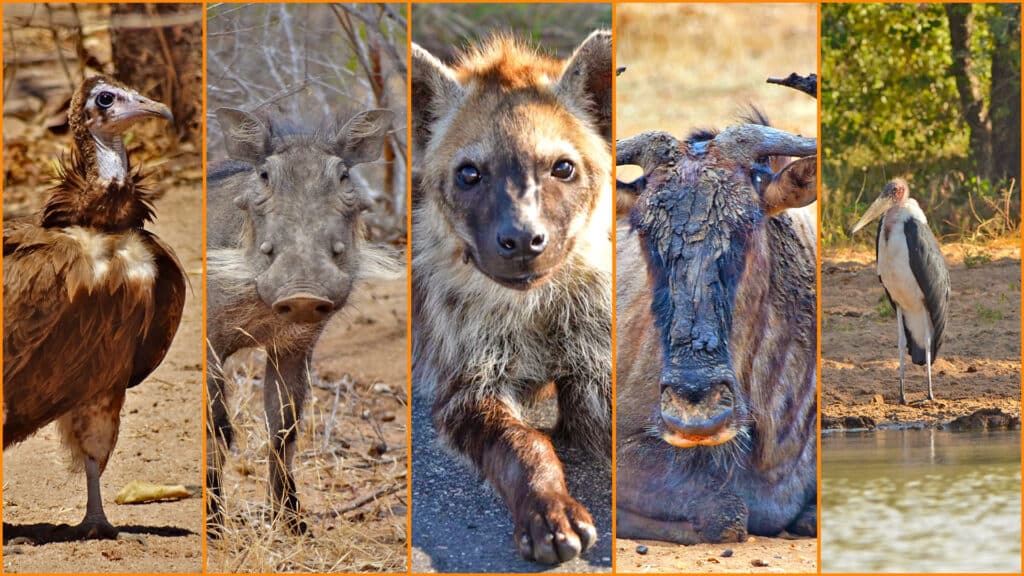
The Ugly Five includes the warthog, spotted hyena, marabou stork, wildebeest, and vulture. While they may not have the elegance of lions or leopards, each species plays a vital role in maintaining healthy ecosystems.
Learning about the Ugly Five helps visitors appreciate that every animal has value, regardless of its appearance.
Warthog: The Tough Survivor
The warthog is one of Africa’s most recognizable mammals. It has a large head, curved tusks, facial bumps known as warts, and a stiff mane running along its back.
Although its appearance may seem unusual, the warthog is perfectly adapted to life on the African savannah. It uses its tusks to defend itself and to dig for roots and bulbs during the dry season. One of the warthog’s most interesting behaviors is entering its burrow backward. This allows it to face any predator that may approach the entrance.
Spotted Hyena: The Powerful Scavenger and Hunter
The spotted hyena often has an unfair reputation. Many people think it survives only by scavenging, but it is actually one of Africa’s most successful hunters. Spotted hyenas live in large social groups called clans and work together to hunt animals such as wildebeest, zebras, and antelopes.
Their incredibly strong jaws allow them to crush bones that many other predators cannot break. By consuming nearly every part of a carcass, hyenas help keep the environment clean and reduce the spread of disease.
Marabou Stork: Africa’s Natural Cleanup Bird
The marabou stork is one of the largest flying birds in Africa. It has a bald head, a long, heavy bill, and a distinctive throat pouch that gives it an unusual appearance.
Despite its looks, the marabou stork performs an important environmental service. It feeds on carrion, fish, insects, and waste, helping remove decaying material from the environment. These birds are commonly seen near rivers, wetlands, and national parks across East Africa.
Wildebeest: The Traveler of the Great Migration
The wildebeest has a unique appearance with the body of an antelope, a large head, a shaggy mane, and a long tail. Its unusual shape has earned it a place among the Ugly Five.
Every year, more than a million wildebeest participate in the Great Migration between Tanzania’s Serengeti National Park and Kenya’s Maasai Mara National Reserve.
This incredible journey is one of the greatest wildlife spectacles on Earth. Wildebeest support predators and help maintain healthy grasslands through their grazing.
Vulture: Nature’s Essential Cleaner
Vultures may not win beauty contests, but they are among Africa’s most valuable birds. These scavengers feed on dead animals before diseases can spread through the environment. Their highly acidic stomachs destroy dangerous bacteria and viruses that could harm other wildlife.
Several vulture species live across Africa, including the white-backed vulture, lappet-faced vulture, and Rüppell’s griffon vulture. Protecting vultures is important because their populations have declined due to poisoning, habitat loss, and collisions with power lines.
Why the Ugly Five Matter
The Ugly Five play essential roles in Africa’s ecosystems. Warthogs help improve soil while feeding, hyenas control prey populations and clean up carcasses, marabou storks remove waste, wildebeest shape grassland ecosystems, and vultures prevent the spread of disease.
Without these animals, many African ecosystems would become less healthy and less balanced. Their importance reminds us that every species contributes to nature, regardless of appearance.
Where Can You See the Ugly Five?
Many of Africa’s national parks provide opportunities to see the Ugly Five. The Serengeti National Park in Tanzania and Maasai Mara National Reserve in Kenya are excellent places to observe wildebeest, hyenas, vultures, and warthogs.
Uganda’s Queen Elizabeth National Park and Murchison Falls National Park are also home to several members of the Ugly Five. Botswana, Namibia, Zambia, and South Africa also offer excellent wildlife viewing opportunities.
The Ugly Five and Conservation
Like many African animals, members of the Ugly Five face challenges from habitat loss, human activities, and climate change.
Vultures are among the most threatened birds in Africa, while wildebeest rely on open migration routes to survive.
Supporting protected areas and responsible tourism helps conserve these important species and the habitats they depend on.
Plan Your African Wildlife Safari
A safari is about more than seeing famous animals. It is an opportunity to appreciate every species that makes Africa’s ecosystems unique.
As you explore Africa’s national parks, take time to observe the Ugly Five. Their unusual appearance hides remarkable survival skills and important ecological roles.
Every encounter reveals another chapter in the story of Africa’s extraordinary wildlife.