Zorilla Facts Africa: The Small Predator With the Most Powerful Defence
The zorilla is small, fearless, and extraordinarily pungent. It weighs less than 1.5 kilograms. Yet lions, leopards, and hyenas avoid it. One encounter with its spray and a predator learns a lasting lesson. The zorilla is Africa’s answer to the North American skunk — and then some.
What Is a Zorilla?
The zorilla, also called the African striped polecat, belongs to the family Mustelidae. This family includes weasels, otters, badgers, and wolverines. The zorilla is the only member of the genus Ictonyx on the African continent. It is not closely related to the skunk, though the two species evolved similar defenses independently.
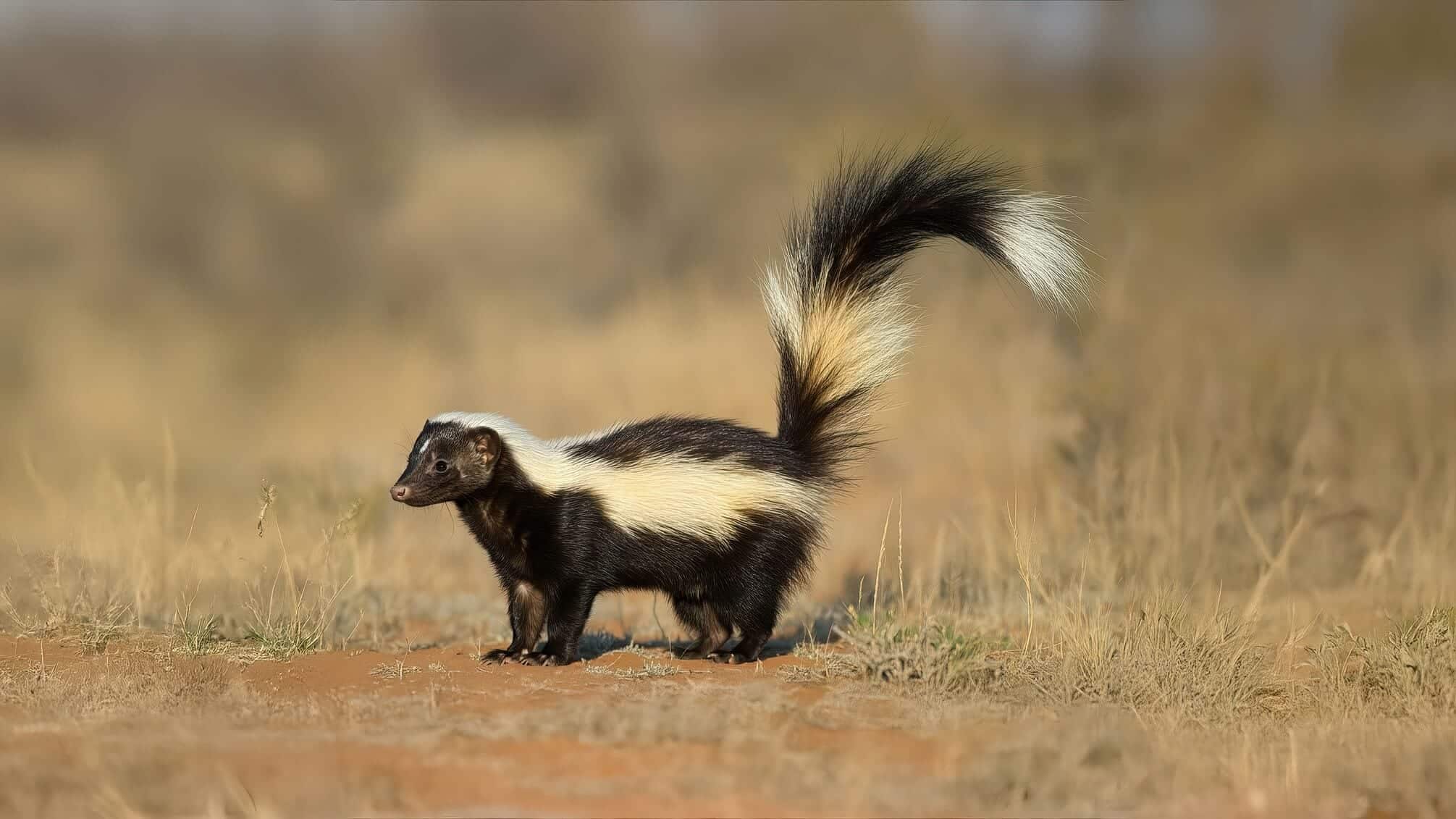
An adult zorilla weighs between 0.6 and 1.4 kilograms. Its body length reaches about 35 centimeters, with a long bushy tail adding another 25 centimeters. It looks striking at first glance. The bold black-and-white patterning announces its presence loudly to any animal that has learned to read warning colors.
Physical Features and Warning Colours
The zorilla’s coat is black across most of the body. Bright white stripes run from the head to the tail. The tail itself is fluffy and predominantly white. This coloring is aposematic—it warns predators of the chemical weapon the animal carries.
The zorilla has small, sharp teeth suited for catching and killing prey. The forepaws carry long curved claws for digging. The body is compact and muscular. Despite its small size, the zorilla approaches prey with complete confidence. It does not flee from animals many times its size.
What Zorillas Hunt and Eat
Zorillas hunt at night. Their diet includes rodents, lizards, snakes, frogs, insects, and birds’ eggs. They also eat invertebrates they dig from soil. The long claws make short work of loosely packed earth. They locate prey largely by smell and hearing rather than by sight.
Zorillas kill rodents and small reptiles with a precise bite to the back of the skull. They are fast and decisive hunters. They can kill prey their own size. Snakes pose no particular problem. Zorillas attack venomous species without hesitation. The exact mechanism of their apparent immunity to snake venom remains incompletely understood.
The Zorilla’s Chemical Defence
The zorilla carries two anal scent glands. Each gland holds a small reservoir of oily, sulfur-compound-rich liquid. When threatened, the zorilla raises its tail and sprays an attacker accurately from up to a meter away. The spray causes immediate burning and temporary blindness in the eyes. The smell persists for days on skin, fur, and clothing.
Before spraying, the zorilla performs a clear warning display. It raises its tail, arches its back, and stomps its feet. It makes a sharp warning sound. Most experienced predators back off at this stage. Only inexperienced young animals, or humans who do not understand the warning, push through it.
Zorilla Habitat and Range in East Africa
Zorillas live across most of sub-Saharan Africa. In East Africa they favor open savanna, grassland, scrub, and rocky areas. They avoid dense rainforest. They prefer drier habitats with good populations of small rodents.
In Kenya they live across the Rift Valley, northern regions, and the Maasai Mara grasslands. Tanzania holds populations throughout the Serengeti ecosystem and the central plateau. Uganda has zorillas in the drier northern and eastern regions. They do not live in the rainforest zones around Bwindi or Kibale.
The Zorilla Compared to the Honey Badger
People often compare the zorilla to the honey badger. Both are mustelids,Both are small, bold, and chemically defended. Both have black-and-white warning coloration. The honey badger is considerably larger — up to 16 kilograms against the zorilla’s 1.4 kilograms. The honey badger is also far more aggressive. It provokes confrontations that the zorilla typically avoids. The zorilla relies on its spray as a deterrent and backs away from direct physical conflict when the spray succeeds.
The two species share overlapping ranges in parts of East Africa. Competition between them is minimal because they target different prey sizes. The honey badger takes prey up to the size of a monitor lizard or young warthog. The zorilla focuses on rodents and small reptiles. Where their territories overlap, each fills a different predatory role in the community.
Zorilla Population Status and Conservation
The zorilla holds a classification of Least Concern on the IUCN Red List. It is relatively widespread across sub-Saharan Africa. Population estimates are difficult to make for a nocturnal, secretive animal with low observation rates. Camera trap studies in East Africa suggest that zorilla density is lower than many other small carnivores. Their chemical defense, while highly effective against predators, does not protect them from habitat loss.
Agricultural expansion represents the main long-term threat. Zorillas need savanna and grassland with viable rodent populations. As grassland converts to farmland, rodent communities shift, and zorilla food supply changes. They sometimes move into farmland edges to exploit grain-store rodents. This brings them into contact with rodenticide baits placed for rats. Secondary poisoning from rodenticide-laden prey kills zorillas silently and in numbers that are rarely recorded.
Plan Your Safari
Zorillas are nocturnal and genuinely secretive. Most safari visitors never see one. The best chance comes on a night drive in open savanna habitat during the dry season. Kenya’s Laikipia Plateau and Tanzania’s Ruaha are good starting points. Ask your guide to watch the edges of rocky outcrops and scrubby grassland.
Zorillas sometimes enter safari lodge camps at night in search of rodents. Several lodges in the Laikipia area have regular zorilla visits. Ask camp staff if they have seen recent activity near the lodge perimeter.
African Wild Trekkers arranges night drives and small-mammal-focused safaris across East Africa. Contact us if you want to build an itinerary around the nocturnal animals most visitors never encounter.