Bat-Eared Fox Guide: The Giant-Eared Insect Hunter of African Grasslands
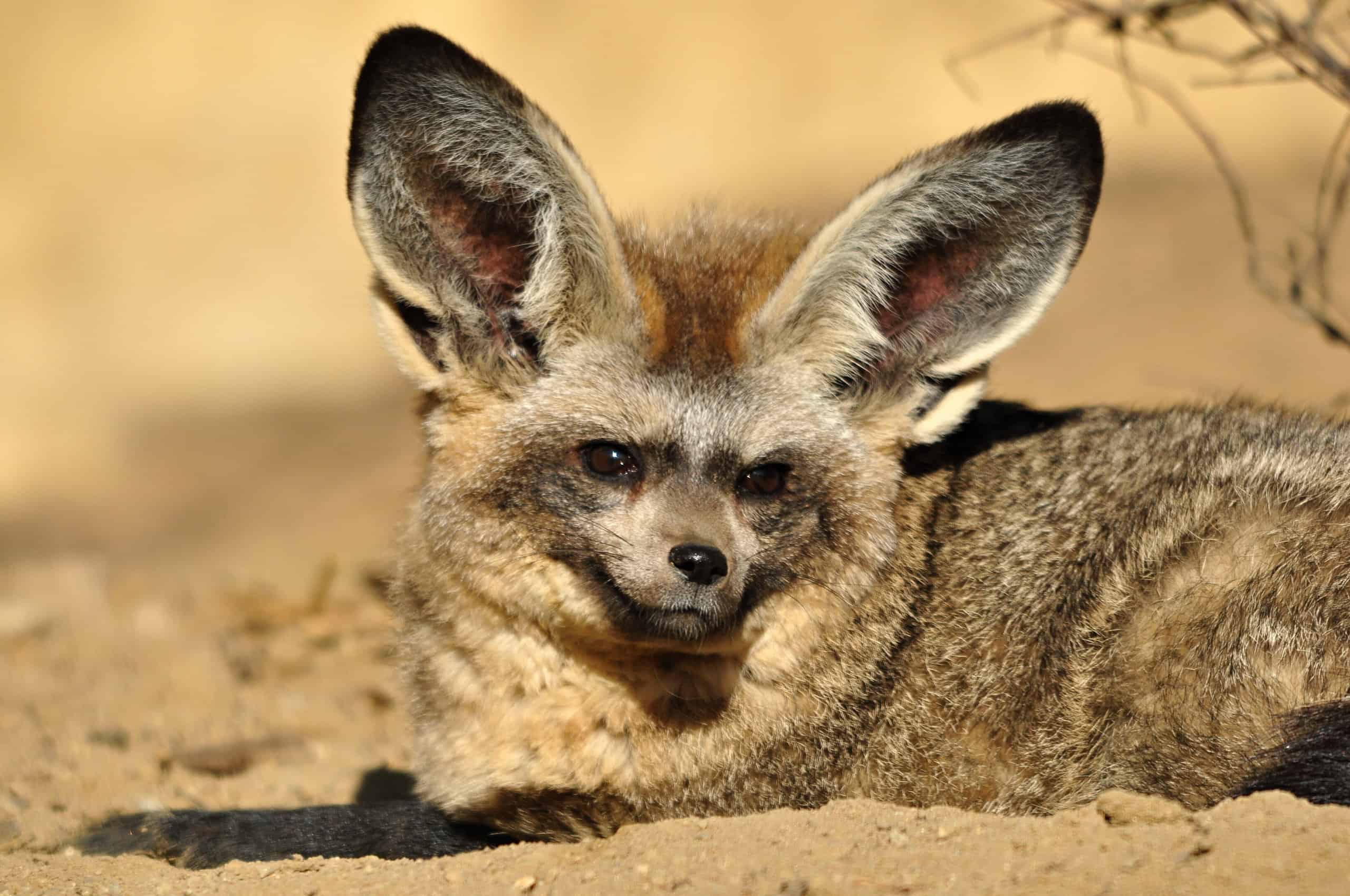
Nothing else on the African plains looks quite like the bat-eared fox. Those ears are absurd. They span 13 centimeters; they swivel independently. They hear a dung beetle larva chewing underground. The bat-eared fox built its entire lifestyle around its ears, and the result is one of Africa’s most distinctive small mammals.
What Is the Bat-Eared Fox?
The bat-eared fox, Otocyon megalotis, is in its own genus. It is the only living species of that genus. Scientists place it in the family Canidae alongside jackals, dogs, and wolves. But the bat-eared fox diverged from other canids millions of years ago and developed unique features found nowhere else in the dog family.
An adult bat-eared fox weighs between 3 and 5 kilograms. It stands about 30 centimeters at the shoulder. The body is slender and long-legged. The face is sharp and pointed. The famous ears are the immediate identifier—broad, rounded, and enormous relative to the body.
How Those Ears Work
The bat-eared fox’s ears contain more muscle groups than any other canid. Each ear moves independently. The fox tilts and rotates each ear separately to triangulate sound sources with remarkable accuracy. It detects insects underground at depths of up to 30 centimeters.
The inner ear structure is also unique. It amplifies low-frequency sounds that other animals miss. This allows the fox to hear dung beetle larvae, termites chewing through wood, and harvester termite activity below the soil surface. The fox walks slowly across the savanna with its head low and ears angled downward, listening for food it cannot see.
Diet: The Dung Beetle Connection
Dung beetles form the core of the bat-eared fox diet. Specifically, the fox targets harvester termites and dung beetle larvae. It also eats ants, grasshoppers, scorpions, small lizards, and wild fruits. Plant matter and fruits become more important during periods of low insect activity.
The bat-eared fox’s teeth are unique in the dog family. It has more teeth than any other non-marsupial mammal on earth — up to 50. These extra teeth are small and blade-like. They slice through insect exoskeletons rapidly. The jaw opens and closes up to five times per second when crunching insects. No other canid jaw moves that fast.
Family Life and Social Behaviour
Bat-eared foxes live in stable monogamous pairs. They often associate in small family groups of two to fifteen animals. The family group forages together and communicates constantly through a range of soft calls. They play frequently, even as adults. This social bonding strengthens the group’s cooperative defense against predators.
The male bat-eared fox contributes more to cub-rearing than the female. He grooms the cubs, plays with them, guards the den, and teaches them to forage. This level of male parental investment is unusual in carnivores. It allows the female to resume foraging quickly after weaning.
Where to See Bat-Eared Foxes in East Africa
Bat-eared foxes live in two separate populations in Africa: one in East Africa and one in southern Africa. The East African population ranges from South Sudan and Ethiopia down through Kenya and Tanzania. It favors short-grass savanna and open bush where dung beetle activity is high.
In Kenya, the Maasai Mara ecosystem holds excellent bat-eared fox populations. The short-grass plains of the southern Mara and the conservancies to the east produce reliable sightings. Tanzania’s Serengeti short-grass plains around Ndutu are equally productive. Both areas support the large herbivore populations that create the dung beetle abundance the foxes depend on.
Predators of the Bat-Eared Fox
Bat-eared foxes face predation from martial eagles, black-backed jackals, caracals, African wild cats, and pythons. The group’s cooperative vigilance system reduces predation risk significantly. When one family member detects an aerial predator, the entire group dives into cover simultaneously. Response times measured in group-living bat-eared foxes are faster than those of solitary individuals. The group’s multiple pairs of eyes and ears effectively extend each animal’s detection range.
When cornered by a ground predator, bat-eared fox family groups mob the threat collectively. They circle the predator, calling loudly, and dart forward in turns. This coordinated behavior confuses and deters most predators. Even jackals — which regularly overpower individual foxes — often retreat from a coordinated family mob. The tactic works because no single fox presents a stable target for long enough to be caught.
Bat-Eared Fox Conservation Status
The bat-eared fox is classified as Least Concern by the IUCN. East African populations are considered stable. Southern African populations have declined in some areas due to loss of short-grass savanna habitat and the reduction in dung beetle populations linked to the widespread use of ivermectin in livestock. Ivermectin-treated cattle dung is toxic to dung beetles, which are the bat-eared fox’s primary food source in many areas.
In East Africa, this particular threat is less severe because livestock management practices differ from southern Africa. The greater concern is habitat conversion. Bat-eared foxes need open short-grass savanna with large herbivore populations to maintain the dung beetle abundance they depend on. Protected areas that maintain large wildlife populations also protect the bat-eared fox’s food supply. The Maasai Mara and Serengeti ecosystems function as strongholds for this reason.
Plan Your Safari
Bat-eared foxes are most active in the morning and late afternoon. They often rest in the heat of the day near their burrows. The best time to watch them is in the golden hour after sunrise or in the two hours before sunset. They forage as a family group, which makes them easier to spot than solitary nocturnal mammals.
The Maasai Mara’s private conservancies—Mara North, Naboisho, and Ol Kinyei—consistently produce bat-eared fox sightings. The short-grass areas near the Tanzanian border in the southern Mara are particularly good. Ask your guide to check open plains areas near dung beetle activity.
African Wild Trekkers arranges safaris across the Mara ecosystem and Tanzania’s Serengeti. If you want a safari focused on the plains’ smaller residents alongside the great migration, contact us to design the right itinerary.