Hippo Calving Africa: Birth, First Hours and the Mother-Calf Bond
A hippopotamus is born in water. The mother separates from the pod a day or two before birth, moving to shallow water away from the main group. The calf arrives underwater and immediately swims to the surface for its first breath. Within minutes it nurses underwater, holding its breath for the brief nursing bout before surfacing again. A hippo calf’s earliest experiences are entirely aquatic—a completely different entry to the world from any land-born mammal.
Birth: Underwater Arrival
Hippo calves arrive after a gestation of approximately 240 days. At birth a calf weighs between 25 and 55 kilograms and stands about 60 centimeters at the shoulder. The mother chooses a secluded location away from the rest of the pod—particularly away from the dominant bull. Bulls have attacked new calves, and that aggression is a documented factor in early calf mortality.
A calf delivered underwater swims to the surface immediately. Newborn hippos are instinctively buoyant and capable of directed swimming from birth, a hard-wired survival response requiring no learning period. This surfacing reflex operates even in calves delivered prematurely under laboratory conditions.
Nursing Underwater
Hippo calves nurse both in the water and on land. Underwater nursing involves the calf surfacing briefly, then diving to the mother’s flank for a 10 to 40-second nursing bout before surfacing again. Both calf and mother close their nostrils automatically during underwater contact—the same reflex that allows hippos to submerge without inhaling.
On land, nursing is more prolonged—several minutes at a time when the mother hauls out at night to graze. Lactation continues for 6 to 8 months in the wild. From about 3 weeks old, calves begin supplementing milk with vegetation, accompanying their mothers on nightly grazing excursions.
The Mother-Calf Bond and Pod Reintegration
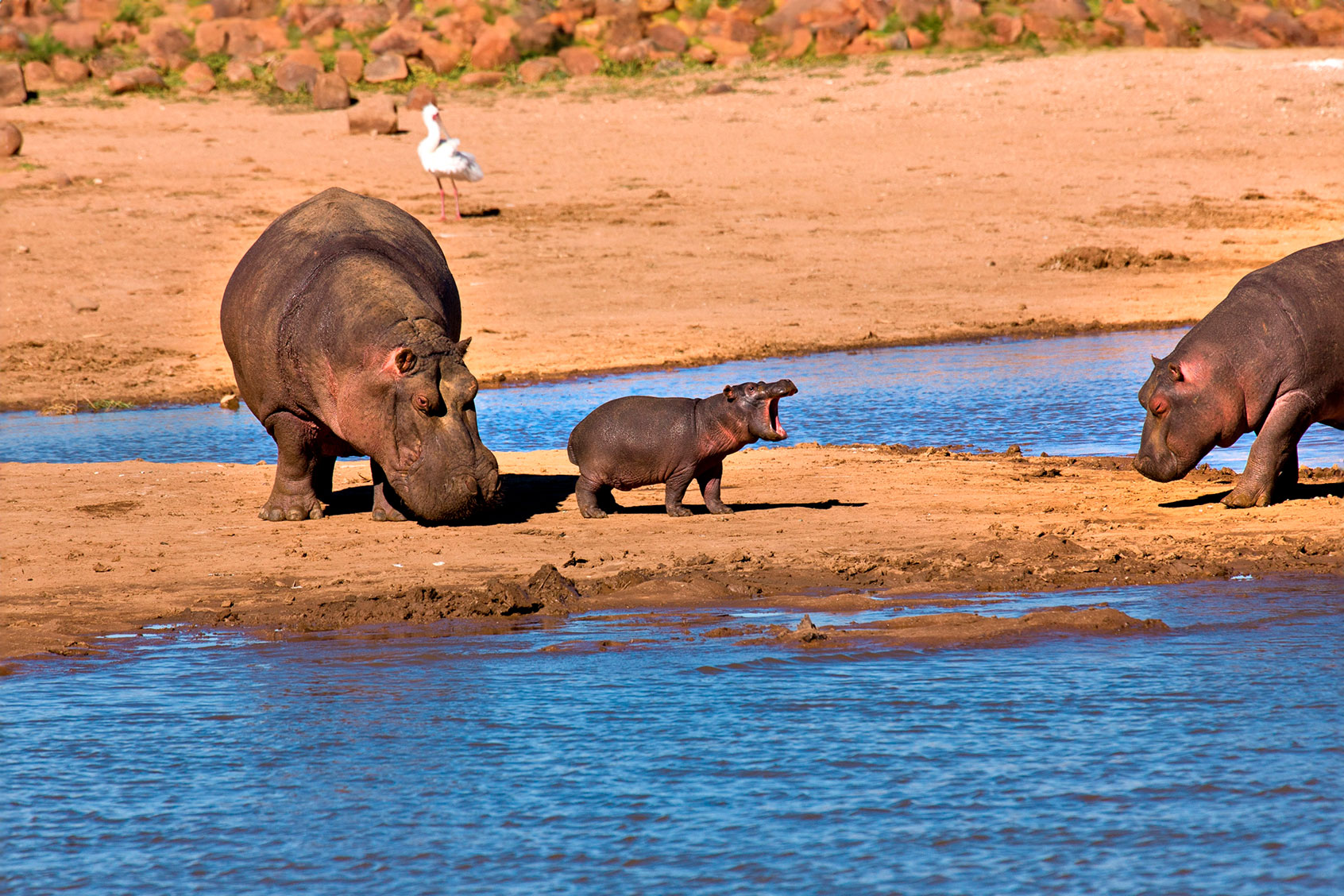
The mother-calf bond is intense and exclusive in the first weeks of life. The mother keeps the calf isolated from the pod and introduces it gradually, usually within one to two weeks of birth. She positions herself between the calf and the dominant bull during early pod interactions. Female pod members often assist by clustering around the new arrival as a protective buffer.
Once the pod integrates the calf, several adult females cluster around calves while others rest—a communal guarding arrangement that reduces individual vigilance costs and improves calf survival chances.
Crocodile Predation on Calves
Nile crocodiles target hippo calves, particularly in the first weeks when the calf is still small enough to grip and drown. The mother’s proximity is the primary defense. Mothers with very young calves charge any crocodile approaching within 20 to 30 meters, submerging it repeatedly with sustained aggression. This mother-crocodile confrontation is one of the most violent sustained inter-species interactions observable in East Africa’s rivers.
Plan Your Safari
Uganda’s Kazinga Channel is the most productive East Africa location for hippo calf observation. The channel’s hippo pods are large and well-habituated to boats. The boat safari passes at water level—giving an intimate view of the pods’ social dynamics, including mother-calf pairs, that no vehicle can match. The Queen Elizabeth National Park hippo population calves year-round, so calf sightings require no particular season. Lake Naivasha in Kenya and Murchison Falls National Park’s Nile also provide excellent hippo pod access from boats.
African Wild Trekkers includes the Kazinga Channel boat safari in all Uganda itineraries. Contact us to plan a Uganda safari built around the country’s extraordinary river and lake wildlife.