Waterbuck Territory Africa: How Male Waterbuck Control Access to Water and Females
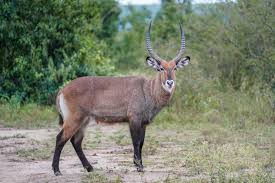
The male waterbuck’s strategy is elegant and water-dependent. He holds a territory on a river bank, lake shore, or permanent waterhole margin. Every female in the area must pass through his territory to drink. Every female that passes must interact with him — giving him assessment and mating opportunities. The resource he controls is not just a nice location. Water is an existential necessity for every antelope in the vicinity. The territorial male waterbuck has positioned himself at the intersection of every large mammal’s daily survival requirement.
Territory Location and Maintenance
Male waterbuck territories are precisely defined and actively defended. Each occupies a stretch of waterfront — river bank, lake shore, or drainage channel — of 50 to 300 metres in length, extending 100 to 250 metres from the water. The territory captures vegetation, shade, and mineral resources as secondary benefits, but water access is the primary resource being controlled.
Territorial males mark borders with glandular secretions deposited on boundary vegetation — the preorbital gland, foot glands, and dung piles at specific boundary latrines all contribute to the scent profile. Adjacent territorial males hold parallel waterfront stretches and interact at boundaries through parallel walking, horn display, and occasional sparring. A younger, stronger male displaces the resident through a sequence of escalating challenges when territorial replacements occur.
The Oily Secretion: Why Predators Avoid Waterbuck
Waterbuck carry a distinctive, strong-smelling oily secretion from sebaceous glands distributed across the skin. This secretion waterproofs the coat waterbuck wade into deep water and enter swamps more readily than most other antelope, and the waterproofing is a practical adaptation for this behaviour. The same secretion produces a persistent musky smell on vegetation where waterbuck have rested or passed through.
Local hunters, guides, and field observations consistently note that predators sometimes release waterbuck without feeding apparently deterred by the taste or smell. Whether this represents a true chemical defence or simply predator learning that waterbuck meat is less palatable than available alternatives remains scientifically debated.
Female Choice and the Territory’s Value
Female waterbuck visit territories to drink and to assess territorial males. A female’s assessment of territory quality water access quantity and consistency, shade availability, grass cover directly influences the mating decision. Superior resource territories attract more female visits. Each visit represents a potential mating opportunity. A male with an excellent territory location consistently outperforms a physically superior male with a poor territory in mating access.
This resource-based female choice system is one of East African wildlife’s clearest examples of females making rational assessments of territory quality rather than simply responding to male physical displays.
Plan Your Safari
Waterbuck territorial males are easily observed at any permanent water source where waterbuck are present. Queen Elizabeth National Park’s Kazinga Channel, the Maasai Mara’s Mara River banks, and Tanzania’s Ruaha River system all produce excellent waterbuck territory observations. Male-male interactions at territorial boundaries parallel walking and horn display preceding or replacing physical sparring occur most often at dawn and dusk when boundaries re-establish after the night’s movements.
African Wild Trekkers designs East Africa safari itineraries that include time at permanent water sources for observing waterhole-dependent species and their territorial dynamics. Contact us to plan a safari that reveals the full social complexity of East Africa’s antelope.