Black and White Colobus Facts: The Forest Canopy Primate of East Africa
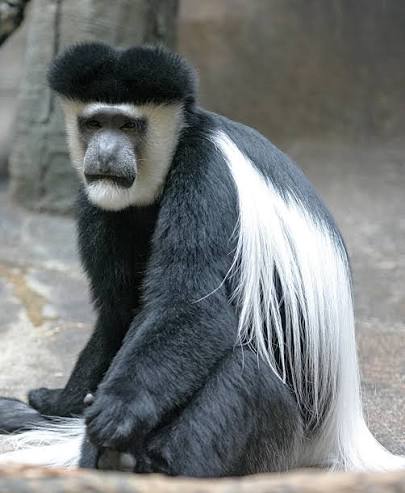
The black and white colobus is the most visually dramatic primate in East Africa. Jet black body fur contrasts with a long white mantle flowing from the shoulders, white facial fringe, and a spectacular white tail plume. Moving through forest canopy, this monkey looks like something borrowed from a Japanese woodblock print bold, graphic, and completely unlike any other primate on the continent. Beyond the visual impact, the colobus holds the distinction of being the only East African primate that has given up the thumb entirely and its remarkable digestive system processes leaves that would poison most other primates.
What Is a Black and White Colobus?
The guereza or eastern black and white colobus, Colobus guereza, is the most widespread and frequently encountered colobus species in East Africa. Adults weigh between 7 and 13 kilograms. Body length reaches 45 to 67 centimetres with a tail of 52 to 100 centimetres the tail is long, with a distinctive white plume at the tip. The contrast between the jet black body and the white mantle, facial fringe, and tail is vivid and visible from long distances in forest canopy. The face is bare and black with a distinctive white U-shaped fringe around the dark skin of the face.
The colobus hand has no thumb the name “colobus” derives from the Greek word for mutilated. The thumbless hand is a hook-like structure perfectly suited to swinging between branches. Loss of the thumb trades grasping versatility for a more efficient arboreal locomotion, keeping the four remaining fingers in a curved configuration that grips branches like a hook rather than wrapping around them with a grasping thumb.
Leaf Diet and Specialised Digestion
Colobus monkeys eat leaves primarily mature leaves that most primates avoid because of high tannin content and low nutritional yield. A multi-chambered, enlarged forestomach ferments these tough leaves before they enter the main digestive tract. Bacterial fermentation in the forestomach breaks down cellulose and neutralises tannins, releasing nutrition from leaves that would cause bloating and poisoning in other primates. This fermentation system mirrors the ruminant strategy of cows and antelopes a rare convergent evolution of foregut fermentation in a primate.
Leaf diet reduces competition with fruit-eating primates that share the same forest. Colobus occupy canopy levels where mature leaves are always available regardless of fruiting season. Food supply remains constant year-round.
Troop Structure and Male Defence
Colobus troops of 3 to 15 individuals contain one dominant male, several adult females, and offspring. The dominant male defends the troop’s core canopy territory against neighbouring males through loud roaring calls that carry through the forest canopy. Male-male conflicts involve chasing through the canopy with the long white tail plume streaming behind one of East Africa’s most spectacular primate displays. Females choose the canopy zone’s fruiting and leafing trees as the group’s daily range, and the male defends whatever area the females use.
Plan Your Safari
Uganda’s Kibale National Park and Bwindi Impenetrable Forest hold the largest accessible black and white colobus populations in East Africa. Guided forest walks through both parks produce colobus encounters at close range in the canopy overhead. Kenya’s Kakamega Forest in western Kenya is a productive colobus location within the Kenya circuit. Tanzania’s Arusha National Park and Kilimanjaro’s forest belt hold populations visible on guided forest walks. Unlike chimps or gorillas, colobus require no permits their viewing is included in the standard park entrance.
African Wild Trekkers includes forest primate walks in Uganda safari itineraries alongside gorilla and chimpanzee tracking. Contact us to plan a Uganda forest circuit that captures the full diversity of East Africa’s extraordinary primates.