Blue Monkey Uganda: The Forest Primate of Kibale and Bwindi’s Canopy
The blue monkey is not blue. The name comes from the lack of distinct patterning rather than any blue colouration in the coat the face appears dark and somewhat bluish-grey compared to the olive or brown tones of the coat, but a blue monkey in the Kibale canopy looks simply dark-grey-green at distance. What the blue monkey offers is accessibility and behavioural richness. Troops occupy Kibale Forest’s canopy alongside chimpanzees, red-tailed monkeys, and red colobus. A forest walk that aims for chimpanzees will encounter blue monkeys multiple times. Knowing what to watch for improves every encounter significantly.
What Is a Blue Monkey?
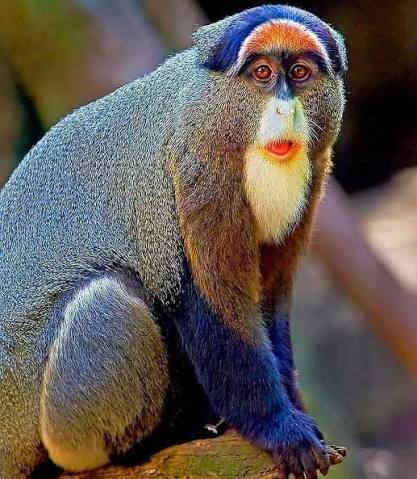
The blue monkey, Cercopithecus mitis, is a medium-sized Old World monkey in the guenon family. Adults weigh between 4 and 8 kilograms. Body length reaches 50 to 65 centimetres with a tail of 75 to 100 centimetres longer than the body. The coat is olive-grey to dark grey-green with pale underparts. The face is dark grey, surrounded by a pale grey or whitish crown patch that creates a cap-like appearance. Black limbs and a black muzzle complete the face pattern. The species shows relatively little sexual dimorphism compared to baboons and mangabeys.
The guenon family includes many colourful, patterned species across Africa. The blue monkey is among the less dramatically marked, but its large size, long tail, and distinctive crown patch make it readily identifiable in the field. The red-tailed monkey of the same forest has a vivid red tail and white nose spot easily separated from the blue monkey when both appear in the same tree.
Social Structure and Forest Troop Life
Blue monkey troops contain 10 to 40 individuals — usually one adult male and multiple adult females with offspring. The single-male structure differs from the multi-male troops of baboons and mangabeys. The dominant male defends the troop against rival males and other threats, patrolling the territory boundary and producing loud calls that advertise the group’s location and the male’s presence. Females form the stable core of the group, with matrilineal rank inheritance similar to the patterns in other cercopithecine primates.
Males transfer between troops at sexual maturity. A new male entering a female group faces a period of harassment from both the resident females and any remaining males until social integration occurs. This transfer mechanism prevents inbreeding and introduces new genetic material into the troop.
Diet: Fruit and Leaves in Seasonal Balance
Blue monkeys eat fruit, leaves, flowers, and insects. Fruit dominates the diet when available. Leaves supplement the diet in periods of low fruit availability. This dietary flexibility allows blue monkeys to maintain year-round residence in forest that experiences seasonal fruiting fluctuations. The broad dietary range also reduces competition with more specialised feeders — the colobus monkey eats mature leaves that the blue monkey avoids, while the red-tailed monkey takes smaller food items that the larger blue monkey’s handling skills do not prioritise.
Range in Uganda
Blue monkeys occupy Uganda’s main forest parks Kibale National Park, Bwindi Impenetrable Forest, Mgahinga Gorilla National Park, and Budongo Forest Reserve near Murchison Falls. They appear at forest margins across western Uganda wherever closed canopy forest exists. Kenya’s highland forests Kakamega, Mount Kenya, and Aberdare forests also hold blue monkey populations.
Plan Your Safari
Uganda’s Kibale National Park is the finest East Africa location for blue monkey observation. The park’s chimpanzee tracking trails pass through blue monkey territory, and encounters are almost guaranteed during every forest walk. The Kanyanchu Visitor Centre’s forest surroundings hold habituated blue monkey troops that allow close approach without disturbance. Bwindi Impenetrable Forest’s gorilla tracking trails also pass through blue monkey habitat the combination of gorillas, chimpanzees, colobus, and blue monkeys in one forest makes Uganda’s primate diversity unmatched in East Africa.
African Wild Trekkers designs Uganda forest safari itineraries combining gorilla tracking, chimpanzee tracking, and full primate diversity walks in Kibale. Contact us to plan a Uganda primate safari that captures the full range of this extraordinary country’s forest wildlife.