Hooded Vulture Facts: The Critically Endangered Small Vulture of East Africa’s Savanna
The hooded vulture is the smallest vulture species in Africa and one of the most threatened. The species is classified as Critically Endangered on the IUCN Red List, making it one of the most urgently threatened large birds in the world. Its population has declined by over 80 percent across its range in the last 50 years. Despite this decline, the hooded vulture is still encountered at carcasses alongside larger vulture species in East Africa’s national parks and conservancies where it persists in viable numbers.
The hooded vulture’s small size relative to other vulture species gives it a specific niche at carcasses. It uses its slender bill to extract small pieces of meat from crevices between bones that the larger vultures’ heavy bills cannot access. This feeding specialisation allows the hooded vulture to feed alongside and after larger species rather than competing directly with them for the same resource.
Identification
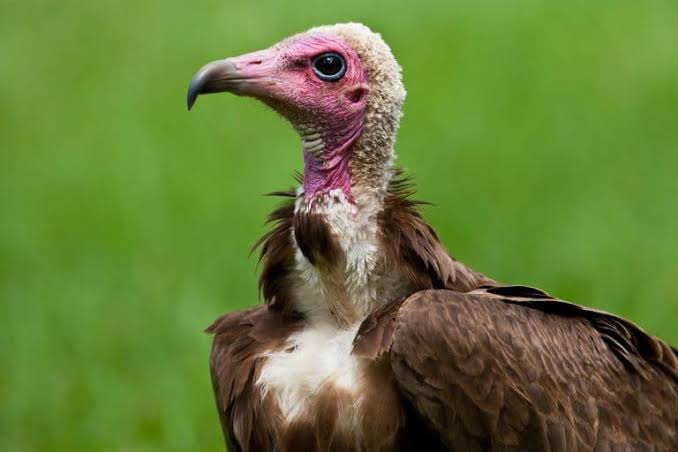
The hooded vulture measures 62 to 70 centimetres considerably smaller than the white-backed, lappet-faced, or Rüppell’s vultures with which it is often seen at carcasses. The plumage is dark brown overall. The head and neck are bare and covered with fine white down that gives the bird a woolly appearance distinct from the naked head skin of larger vultures.
The facial skin is pink to red and becomes more vividly red during excitement at a carcass or during display. The slender bill is pale at the base and dark at the tip. The small size, woolly white-downed head, and slender bill together distinguish the hooded vulture from all other African vulture species even when seen briefly at a shared carcass.
In flight, the hooded vulture shows a characteristic diamond-shaped tail and relatively narrow wings that differ from the broader, squared wing profile of the large vulture species soaring in the same thermals. The diamond tail shape is the most useful in-flight identification feature when the bird is seen overhead at distance.
Conservation Status and Threats
The hooded vulture faces multiple simultaneous threats that have driven the population collapse of the last 50 years. Poisoning is the most significant driver of mortality. Poisoned carcasses set for lions and hyenas kill dozens to hundreds of vultures simultaneously when a large group gathers at a poisoned kill. The secondary poisoning of vultures by stockpile farmers, herders, and increasingly by commercial poachers who poison carcasses to prevent vultures circling overhead and alerting rangers to illegal kills, removes large numbers of birds from the population.
Electrocution on powerlines is another significant mortality cause. Hooded vultures use powerline poles as roost sites and are electrocuted on unsafe pole designs that allow wingspan contact with live wires. Trapping for the traditional medicine trade and hunting for bush meat contribute additional mortality in parts of the species’ West African range.
The species’ slow reproductive rate one egg per year with a long chick development period means that even modest increases in adult mortality immediately drive the population into decline. Conservation programmes focused on removing poisoning threats and retrofitting unsafe powerlines are the most effective interventions available to reverse the current trajectory.
Where to See Hooded Vultures in East Africa
Hooded vultures are present at carcasses in most of East Africa’s major national parks and conservancies alongside the larger vulture species. Tanzania’s Serengeti, Kenya’s Maasai Mara, and Uganda’s Queen Elizabeth National Park all carry accessible hooded vulture populations.
The species is reliably found at the same carcass gatherings that attract white-backed and Rüppell’s vultures in large numbers. The smaller hooded vulture typically waits at the periphery of the large vulture feeding mass and moves in to access the bone crevices and remaining scraps when the larger birds have finished their feeding.
Additionally, hooded vultures are regularly seen around abattoirs, fish markets, and human rubbish sites near towns within their range. This tolerance of human-altered environments partly compensates for habitat loss but also exposes the birds to additional poisoning risk from discarded baits and toxic waste at these sites.
Plan Your Birding Safari
Hooded vulture sightings are most likely at carcass sites in East Africa’s national parks alongside the larger vulture species. Any game drive that encounters a vulture gathering at a kill in Tanzania’s Serengeti or Kenya’s Mara will include hooded vultures in the feeding assemblage during the peak wildlife season.
Tanzania’s Serengeti provides the highest density vulture viewing in East Africa during the wildebeest calving season from January to March, when daily natural mortality provides continuous carcass access for all the resident vulture species.
African Wild Trekkers designs Tanzania and Kenya safari itineraries through the core vulture habitats of both countries. Contact us to plan a safari that includes the full vulture community of East Africa’s most productive wildlife ecosystems.