African Buffalo Herd: The Power and Politics of Africa’s Most Dangerous Bovid
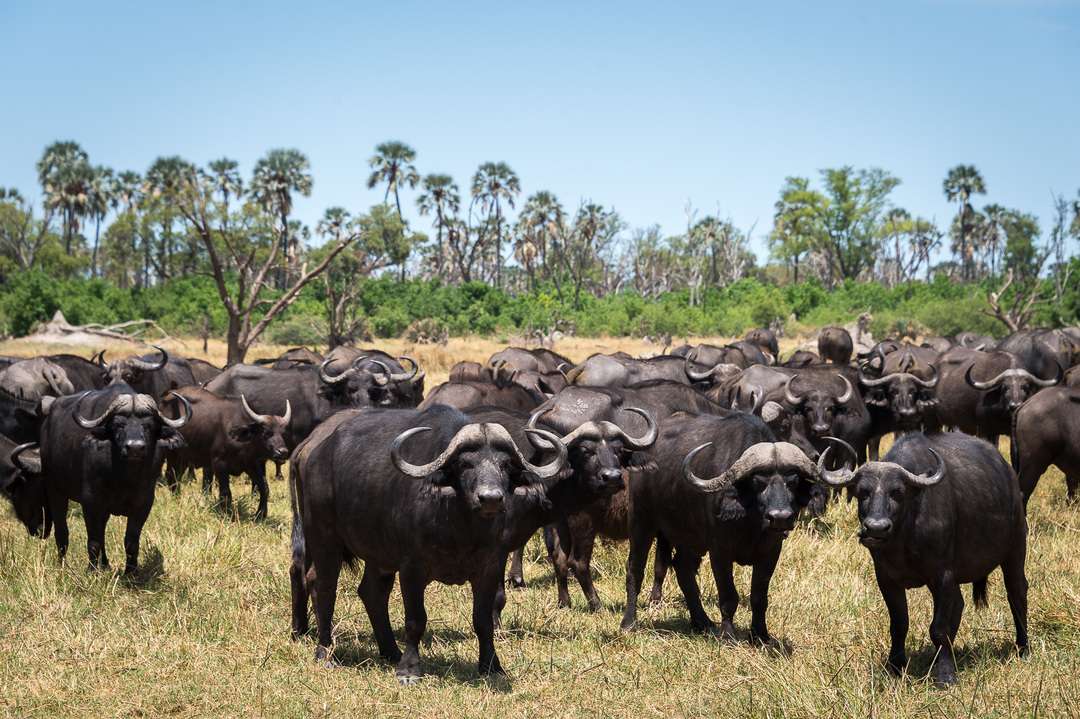
A buffalo herd in the Maasai Mara can number 2,000 animals moving as a single organism across the open plain. The sound arrives before the sight — a deep rumbling of hooves and the dusty smell of thousands of large bovines. Then the herd appears, spreading across the plain from horizon to horizon. The African buffalo is one of the most underestimated animals in East Africa and one of the most fascinating once you understand how its society works.
Herd Size and Composition
Buffalo herds vary enormously in size. In optimal savanna habitats — the Serengeti, the Maasai Mara, and Uganda’s Queen Elizabeth National Park — herds of 500 to 2,000 individuals are common during the wet season. These large aggregations provide anti-predator benefits through collective vigilance and sheer numerical defense. A lion pride cannot effectively isolate individuals from a tightly packed herd of 500 buffaloes.
Herd composition includes both sexes and all age classes. Adult bulls dominate the highest-quality feeding areas within the herd. Old bulls that have been displaced from the main herd by younger males form separate bachelor groups or live as solitaries. These old solitary bulls—dagga boys in safari vernacular—are more dangerous to approach on foot than herd animals. They have nothing to gain by retreating and will charge with determination when cornered or surprised.
Democratic Movement Decisions
An extraordinary piece of research conducted on Cape buffalo in South Africa documented what appears to be democratic voting behavior. Females within a herd stand up, gaze in a specific direction for several minutes, and then lie down again. This behavior—called “voting” in the published research—occurs when the herd must decide where to move next. The direction that receives the most gazes is the direction the herd eventually moves. Dominant individuals do not determine the movement direction alone. The aggregate input of many individuals guides the herd’s collective decision.
This finding challenged the assumption that herd movement in large bovids is simply a matter of following dominant individuals. The democratic element in buffalo movement decisions appears to integrate the information and preferences of hundreds of individuals, potentially improving the overall quality of navigation decisions across the herd’s daily and seasonal ranging.
Buffalo and Lions: The Classic Confrontation
The relationship between lions and buffalo is one of Africa’s most dramatic predator-prey interactions. Lions kill buffalo—it is a dangerous hunt that requires coordinated pride effort and good fortune. Buffalo kill lions—it is a defensive or retaliatory act that requires collective herd mobilization. Both outcomes are well documented in every major East African park.
When a lion brings down a buffalo, other buffalo in the area frequently return to confront the pride. The returning buffaloes charge and mob the lions, sometimes recovering the still-living victim and driving the lions off. This rescue behavior—documented in the famous “Battle at Kruger” video and in many less-publicized encounters—reflects the herd’s investment in defending its members. The calculus is straightforward: a smaller herd is more vulnerable to the next lion attack.
Feeding and the Buffalo’s Ecological Role
Buffalo are bulk grazers. They consume large quantities of medium and tall grass that most other grazers pass over. This grass-height preference makes them important facilitators of shorter-grass specialists—zebra and wildebeest move into areas recently grazed by buffalo and feed on the regrowth. The buffalo’s grazing facilitation supports the high diversity of grazer communities that characterize East Africa’s best savanna ecosystems.
The wallowing behavior of buffalo creates seasonal waterholes and mud wallows used by dozens of other species. Trampled buffalo paths become regular wildlife corridors. Dung produces insect communities that support ground birds. The buffalo is a keystone species in East Africa’s savanna—its presence shapes the landscape and the biodiversity that landscape supports.
Plan Your Safari
Queen Elizabeth National Park in Uganda holds one of East Africa’s largest buffalo populations. Herds of several hundred animals are a daily sight on the Kasenyi plain and along the Kazinga Channel. Tanzania’s Tarangire National Park is famous for its dry-season buffalo concentrations around the Tarangire River. Kenya’s Maasai Mara hosts large herds on the open plains during the wet season when grass is long and abundant.
African Wild Trekkers includes Queen Elizabeth, Tarangire, and the Maasai Mara in East Africa circuits where big buffalo herds are a feature of every itinerary. Contact us to plan your East Africa safari.