Hippopotamus Facts Africa: The River Giant That Shapes Entire Ecosystems
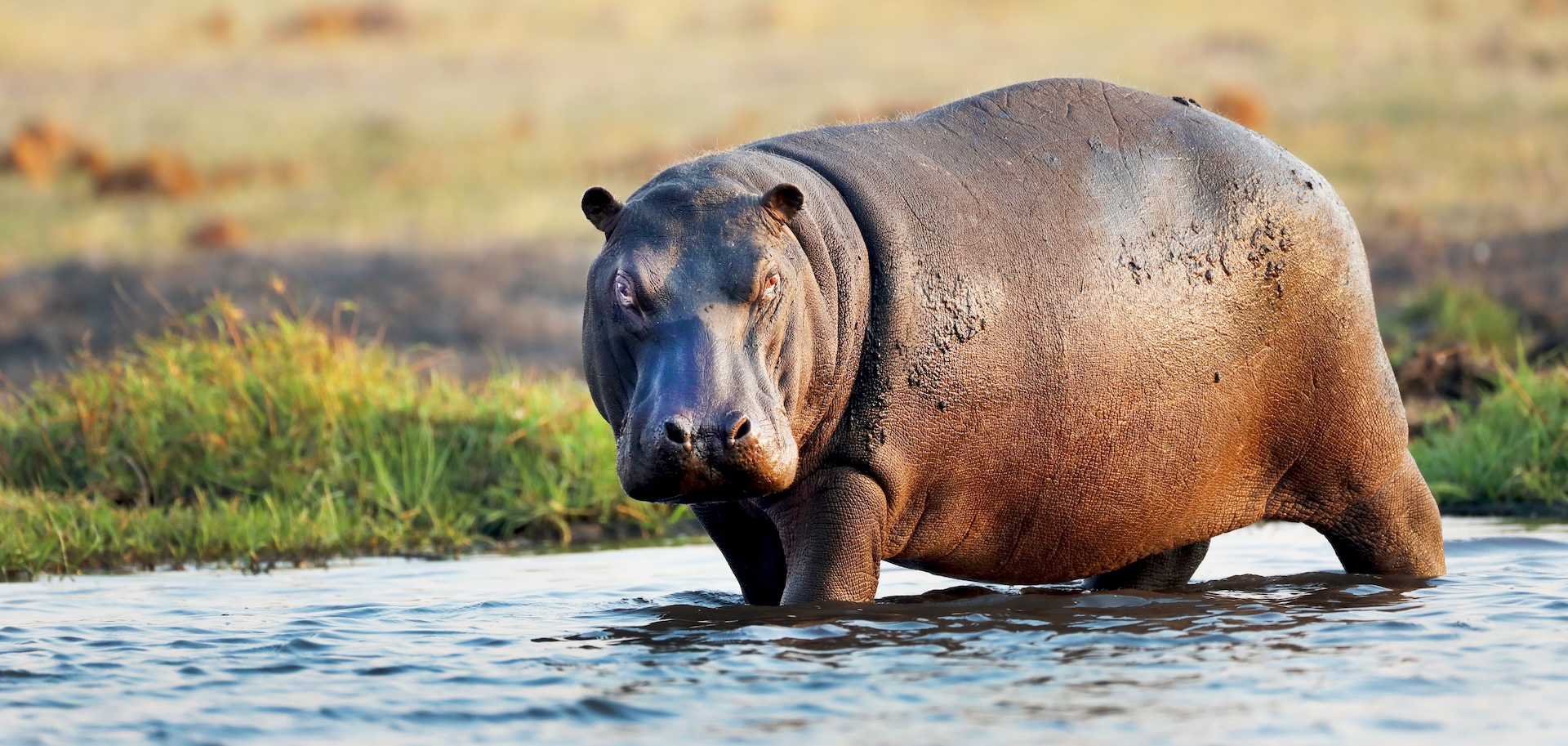
The hippopotamus is the third-largest land animal on earth, after the elephant and the white rhinoceros. It spends up to 16 hours a day submerged in water to regulate its body temperature. At night it walks up to 10 kilometers across land to graze. It is responsible for more human deaths in Africa than any other large mammal. And despite being a herbivore, it is among the most consequential nutrient engineers in African river ecosystems.
Physical Facts: How Big Is a Hippo?
An adult male hippopotamus weighs between 1,500 and 3,200 kilograms. Females are smaller at 1,400 to 2,500 kilograms. Body length reaches 3.5 to 4 meters. Shoulder height is about 1.5 meters. The canine teeth of adult males grow to over 50 centimeters and are used as weapons in territorial fights. These tusks are continuously growing, self-sharpening against each other as the jaw closes, and capable of splitting a small boat in a single bite.
The skin is nearly hairless and dries out quickly in direct sunlight. To prevent this, hippos secrete a pinkish, oily fluid from skin glands—sometimes called “blood sweat,”,” though it is neither blood nor sweat. This secretion contains compounds that act as sunscreen and antibacterial agents simultaneously. It is one of the most unusual biological solutions to a UV-exposure problem found in any large mammal.
Aquatic Life and Thermoregulation
Hippos are not strong swimmers. They walk on the river or lake bottom, occasionally bouncing upward to surface for air. Submersion periods of 3 to 5 minutes are normal, with maximum documented breath-holding of up to 7 minutes. Calves cannot hold their breath as long and must surface more frequently—a newborn calf can surface, breathe, and submerge again while still nursing underwater.
The water is essential for thermoregulation. Hippos have no functional sweat glands beyond the skin secretion system. Direct sun exposure for extended periods raises body temperature to dangerous levels. The daytime river or lake environment keeps them cool at essentially zero metabolic cost. This makes water access a non-negotiable element of hippo habitat requirements.
Territorial Behaviour and Aggression
Adult male hippos are intensely territorial within the water. Each dominant bull controls a stretch of river or lakeshore from 100 to 500 meters long. He defends this territory against rival males through wide-mouthed threat displays—opening the jaw to reveal the tusks in a display of weaponry—and through direct fights that frequently produce severe tusk injuries and occasionally kill the loser.
Hippo territories determine where pods of females and subordinate males can rest. The territorial male shares the water space with multiple females and allows non-challenging subordinates. He mates with females in oestrus within his territory. Mating occurs underwater, with the female frequently submerged. Calves are born in water or on land near water after an eight-month gestation period.
Hippos as Nutrient Engineers
Research in Africa’s lakes and rivers has shown that hippos are among the most important nutrient engineers in aquatic ecosystems. The dung a single hippo deposits in the water daily — around 150 kilograms — fuels aquatic food chains by providing organic material and nutrients that drive algae, invertebrate, and fish production. In Lake Naivasha in Kenya and along Tanzania’s Mara River, hippo dung inputs account for a significant portion of the nitrogen and carbon entering the aquatic food web.
When hippo populations decline—through poaching, drought, or habitat exclusion—the aquatic food web can collapse locally. Fish populations drop within years. The entire downstream food chain dependent on the hippo’s nutrient subsidy suffers. This ecosystem engineering role makes the hippopotamus ecologically important far beyond its charismatic size.
Nocturnal Grazing
After sunset, hippos leave the water and walk inland to graze. They follow established paths worn smooth by generations of use. A single hippo consumes 35 to 40 kilograms of grass per night. Grazing occurs on short grass preferentially—hippos are lawn mowers in the most literal sense, keeping grass cropped short around the margins of their waterways. This grazing creates short-grass lawns that attract other herbivores during the day.
Plan Your Safari
Uganda’s Queen Elizabeth National Park offers the best hippo watching in East Africa. The Kazinga Channel—a natural waterway connecting Lakes George and Edward—holds hundreds of hippos visible from a boat safari that passes within meters of resting pods. Tanzania’s Serengeti, Mara River, and Kenya’s Maasai Mara also produce outstanding hippo sightings. A hippo boat safari on the Kazinga is one of the most reliable and rewarding wildlife experiences in the whole of East Africa.
African Wild Trekkers includes Kazinga Channel boat safaris in all Uganda itineraries. Contact us to design an East Africa safari that includes this unmissable river wildlife experience.