Hippo Facts and Safety: Everything You Need to Know About Africa’s Powerful River Giant
The hippopotamus, commonly called the hippo, is one of Africa’s largest and most recognizable mammals. Although hippos often appear calm while resting in rivers and lakes, they are powerful wild animals that deserve respect. Their enormous size, strong jaws, and protective nature make them one of the most formidable animals in Africa.
Hippos spend much of the day submerged in water to stay cool before emerging in the evening to graze on grass. They are an important part of Africa’s freshwater ecosystems and can be seen in many national parks across East and Southern Africa.
Where Do Hippos Live?
Hippos live near rivers, lakes, swamps, and wetlands throughout sub-Saharan Africa. They depend on permanent water because their skin dries out quickly under direct sunlight.
Some of the best places to see hippos include Murchison Falls National Park and Queen Elizabeth National Park in Uganda, Serengeti National Park in Tanzania, Maasai Mara National Reserve in Kenya, South Luangwa National Park in Zambia, and Chobe National Park in Botswana.
These waterways provide the water, food, and shelter hippos need to survive.
How Big Can a Hippo Grow?
Hippos are among the largest land mammals in the world. Adult males can weigh more than 3,000 kilograms, while females are generally smaller.
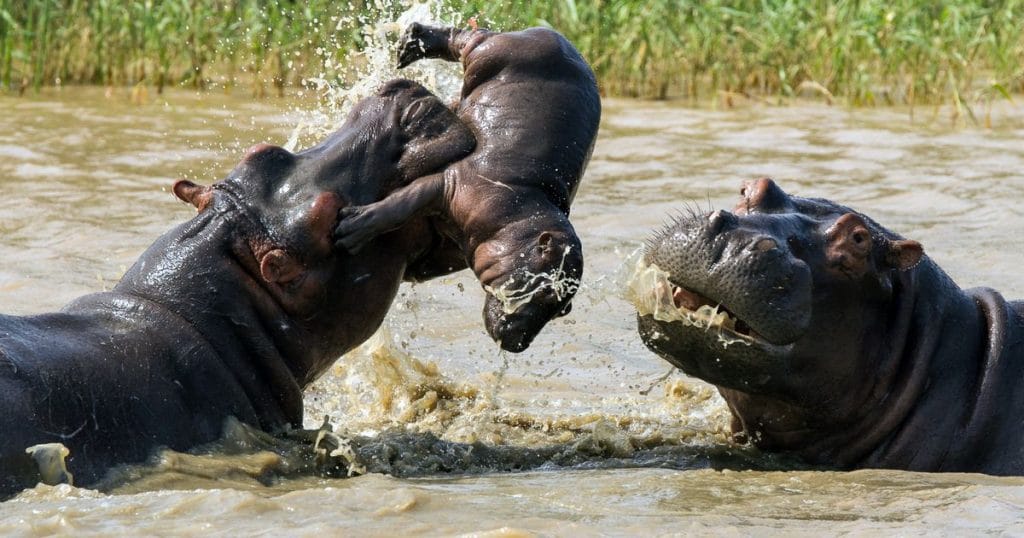
Despite their massive bodies, hippos can move surprisingly fast. They can run at speeds of up to 30 kilometers per hour over short distances, making them much quicker than many people expect. Their large mouths can open to nearly 150 degrees, revealing powerful jaws and long canine teeth that they use mainly for defense and fighting rather than feeding.
What Do Hippos Eat?
Hippos are herbivores that feed mainly on grass. They leave the water after sunset and may travel several kilometers each night in search of fresh grazing areas. An adult hippo can consume around 35 to 40 kilograms of grass in a single night. Although they spend most of their time in water, they rarely feed on aquatic plants.
Their nighttime grazing helps maintain healthy grasslands and supports the balance of local ecosystems.
Hippo Social Behavior
Hippos are social animals that often live in groups called pods, schools, or bloats. A group may include several females, young calves, and a dominant male that protects the territory.
The dominant male uses displays, vocalizations, and physical strength to defend his section of the river from rival males. Female hippos care for their calves and remain close to them, especially during their first months of life.
Although hippos spend much of the day resting together, they can become highly territorial in the water.
Hippo Facts You May Not Know
Hippos cannot swim in the way many people imagine. Instead, they walk or push themselves along the bottom of rivers and lakes while holding their breath for several minutes.
Their eyes, ears, and nostrils are positioned on top of their heads. This allows them to remain mostly underwater while still seeing, hearing, and breathing.
Hippos produce a natural oily substance on their skin that acts as a moisturizer and helps protect them from the sun. This secretion has a reddish color, leading to the myth that hippos “sweat blood.” Although they look slow and heavy, hippos are agile in both water and on land.
Are Hippos Dangerous?
Hippos are wild animals that should always be treated with caution. They are highly protective of their territory, especially in the water, and females are very defensive when calves are nearby.
Most aggressive encounters happen when a hippo feels threatened or when people unknowingly block its path between grazing areas and the water. Hippos do not hunt humans for food, but they may charge if they perceive danger or feel cornered.
Hippo Safety Tips on Safari
The best way to stay safe around hippos is to keep a respectful distance and always follow your guide’s instructions. Never approach a hippo on foot or attempt to get close for photographs. When enjoying a boat safari, remain seated and avoid making sudden movements or loud noises. Boat operators understand hippo behavior and know how to maintain a safe distance.
If you are walking in areas where hippos live, stay alert, especially around rivers and lakes at dawn, dusk, or night when hippos travel between water and grazing areas. Never stand between a hippo and the water. If a hippo feels trapped, it may charge to reach safety.
Hippos and Conservation
Hippos face growing challenges from habitat loss, drought, and illegal hunting. Expanding human settlements near rivers and wetlands have reduced many of the habitats they depend on.
Protected areas, responsible tourism, and conservation programs help safeguard hippo populations and preserve Africa’s freshwater ecosystems. Visitors who choose ethical safari operators contribute to conservation efforts that benefit both wildlife and local communities.
Best Places to See Hippos in Africa
Hippos are commonly seen during boat safaris and game drives in many African national parks. Uganda’s Kazinga Channel and the Nile River in Murchison Falls National Park offer excellent opportunities to observe large pods.
Other outstanding destinations include Tanzania’s Serengeti National Park, Kenya’s Maasai Mara National Reserve, Botswana’s Chobe National Park, Zambia’s South Luangwa National Park, and Namibia’s Caprivi Region. Early morning and late afternoon are often the best times to watch hippos as they become more active.
Plan Your African Hippo Safari
Watching hippos in their natural habitat is one of the highlights of an African safari. Their impressive size, fascinating behavior, and important ecological role make them unforgettable animals to observe.
By following safety guidelines and respecting their space, visitors can enjoy close but responsible wildlife encounters while supporting the conservation of one of Africa’s most remarkable mammals.