Elephant Matriarch Role: Why the Oldest Female Decides Everything
Remove the matriarch from an elephant family, and the family loses its compass. Studies from Amboseli, Tarangire, and the Serengeti show consistently that families led by older, more experienced matriarchs survive drought better, respond to threats more appropriately, and produce more surviving calves per female per year. The matriarch is not the largest female, not the most aggressive, and not the most recent mother. She is the oldest—and age in elephant society means knowledge that cannot be replaced.
Who Is the Matriarch?
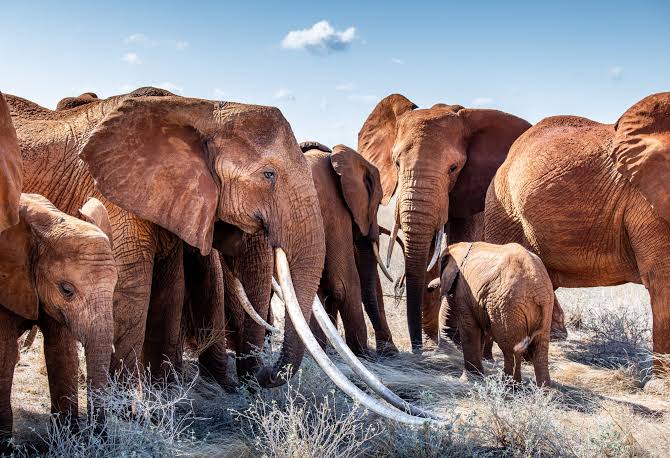
The matriarch is the oldest female in the family. She may be 50 to 60 years old or more. Her daughters, granddaughters, and their calves form the family group she leads. She is recognizable in the field by her size—older females are typically the largest in the family—her worn tusks, and the way other family members orient toward her when the group is unsure. When a threat appears or a decision must be made, every elephant in the family looks to the matriarch first.
Matriarchies are not inherited in a simple genetic sense. The oldest surviving female becomes matriarch by default when the previous leader dies. If the previous matriarch’s oldest daughter is 30 years old, that daughter becomes the new matriarch — but she carries 30 fewer years of experience than her mother. The family’s knowledge base drops sharply with the death of a long-lived matriarch, and the effects persist for years in the successor’s decision-making.
Threat Assessment: What Decades of Experience Provide
Cynthia Moss and Karen McComb’s research at Amboseli tested matriarch threat assessment directly. They played recordings of lion roars and human voices to elephant families and measured the response intensity and quality. Families led by older matriarchs responded more appropriately — grouping tightly, scent-checking the air, retreating or standing firm in proportion to the actual threat level. Families led by younger matriarchs often over-reacted to minor threats and under-reacted to serious ones.
A matriarch who has survived 50 years in East Africa’s savannas has heard lion roars hundreds of times, encountered Maasai herders, dodged poaching events, and navigated dozens of drought years. Her threat response library is vast. When she hears a sound, smells a presence, or assesses a landscape, she draws on experiences her daughters simply have not had. This experiential gap explains the measured quality of her decisions in tense situations.
Drought Navigation: The Matriarch’s Most Critical Role
Drought is the most severe challenge an elephant family faces in East Africa. Water sources dry up. Grass disappears. Food becomes calorie-insufficient. Families must travel further, faster, and more accurately to survive. McComb’s long-term Amboseli data show clearly that families led by older matriarchs survive droughts at higher rates than families led by younger females.
The matriarch’s drought advantage comes from memory. She has survived previous droughts and knows where water persists longest—seasonal waterholes, spring lines in rocky hills, and dry riverbeds that hold subsurface water. She knows which feeding areas hold dry-season grass when the open plains are exhausted. This spatial memory of rare, temporally irregular resources cannot be derived from observation of the current environment. It comes only from direct experience.
Social Arbitration and Family Cohesion
The matriarch arbitrates conflict within the family. When two younger females disagree over movement direction, foraging location, or response to a stranger, family members look to the matriarch’s behavior to resolve the dispute. Her movement signals the group’s decision, and her relaxation signals safety. Her alertness raises the group’s collective vigilance instantly.
The matriarch also mediates interactions with other family groups. She recognizes the matriarchs of other families and holds decades of relationship history with them. Families with a positive historical relationship approach each other differently than families with a history of competition. The matriarch’s memory of these inter-family relationships guides social decisions that younger females do not have the context to make correctly.
When the Matriarch Dies
The death of a long-lived matriarch is catastrophic for her family. The successor lacks the accumulated knowledge. Families that lose their matriarch to poaching—for ivory—show measurably elevated stress hormones in subsequent years, reduced calf survival rates, and more erratic movement decisions. The loss of one individual ripples through the family’s performance across all dimensions for years. This quantified knowledge cost is among the strongest scientific arguments for the protection of Africa’s oldest elephants.
Plan Your Safari
Amboseli National Park offers the most intimate matriarch-focused elephant watching anywhere in Africa. The named families and their matriarchs are known to every experienced guide. Walking safari camps on the Amboseli ecosystem’s private conservancies allow on-foot elephant encounters with habituated family groups. Tarangire National Park in Tanzania is also excellent for multi-generational family watching during the dry season.
African Wild Trekkers designs Amboseli and Tarangire elephant-focused safaris with guides who know the individual families by name. Contact us to plan a safari centered on East Africa’s most compelling family drama.