
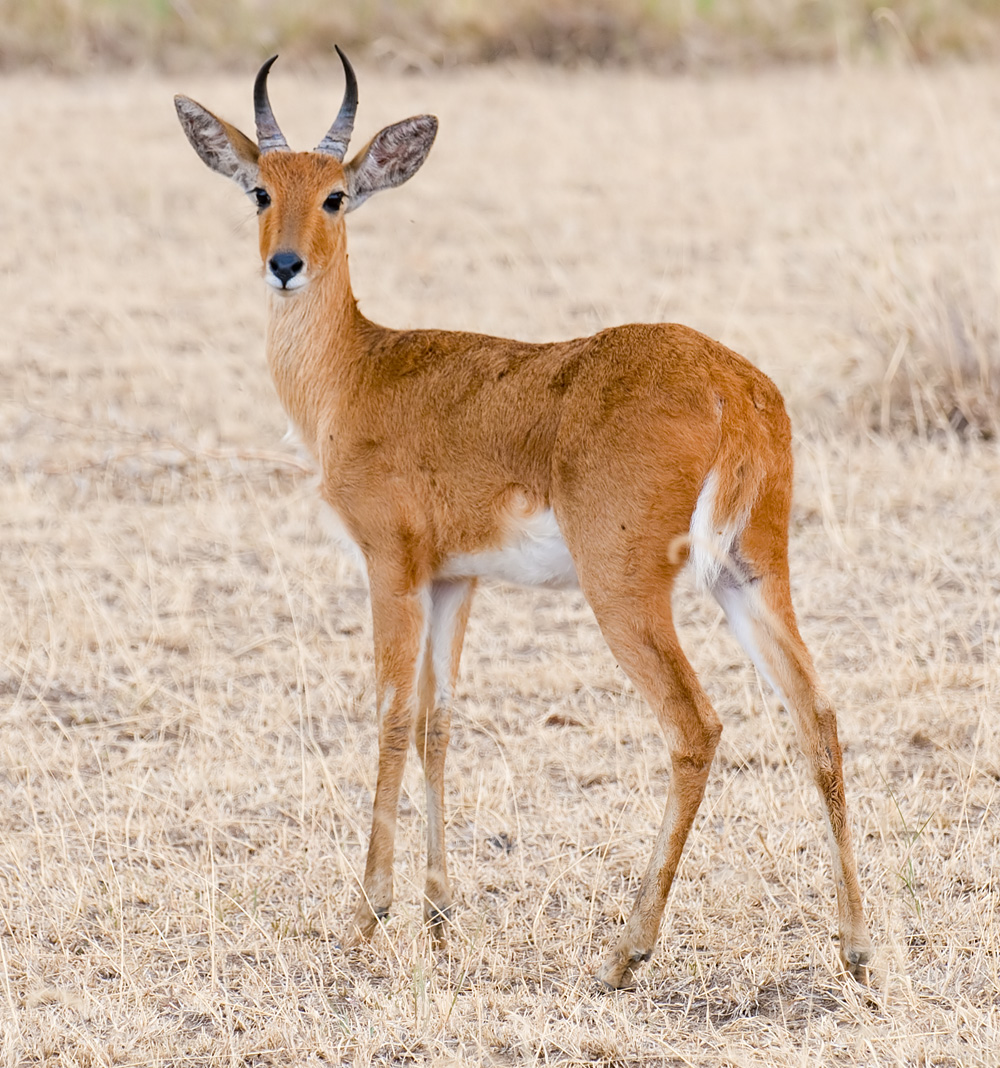
Bohor Reedbuck Africa: The Whistling Antelope of East Africa’s Grasslands
A sharp, explosive whistle erupts from tall grass on an East Africa floodplain. A reddish-brown antelope bounces away on stiff legs. This is the bohor reedbuck among the most frequently heard and least photographed antelopes in East Africa. Its habit of lying concealed until the last second, then erupting with that piercing alarm call, means it startles more safari visitors than it rewards. Knowing its habitat preferences is the key to finding and watching it properly.
What Is a Bohor Reedbuck?
The bohor reedbuck, Redunca redunca, belongs to the reedbuck and waterbuck family. Adult males weigh between 43 and 65 kilograms. Females weigh 35 to 45 kilograms. Shoulder height reaches 70 to 89 centimetres. Only males carry horns forward-hooked at the tips and reaching 25 to 41 centimetres. The coat is uniform tawny-brown to reddish-brown above and white below. A glandular bare-skin patch below each ear marks the subauricular gland. A distinctive white patch shows on the inner hindleg surface when the animal runs.
Three reedbuck species live in East Africa. The bohor reedbuck occupies the plains and floodplains of Uganda, Kenya, and Tanzania. The mountain reedbuck lives at higher altitudes. The southern reedbuck replaces the bohor in southern Africa.
Habitat: Tall Grass and Wetland Margins
Bohor reedbucks occupy tall or medium-height grass near water floodplains, river margins, papyrus swamp edges, and open grassland with seasonal wetland areas. Dense bush does not suit them. Open short grass does not either. Tall grass provides cover for resting and escape. Nearby water serves as a daily drinking source. Uganda’s national parks and the wetter zones of Kenya and Tanzania near permanent drainage hold this habitat combination in abundance.
Queen Elizabeth National Park’s Mweya peninsula floodplains support resident bohor reedbuck populations. Murchison Falls’ open grasslands hold them on both banks of the Nile. In Kenya’s Maasai Mara, they inhabit tall-grass zones along the Mara River and its tributaries. Tanzania’s Serengeti holds them in permanent-grass zones near drainage lines.
The Alarm Whistle and Concealment Strategy
Concealment followed by explosive flight is the bohor reedbuck’s primary defence. It crouches in tall grass and stays motionless when approached. A threat that passes without detecting it prompts no movement. When the threat comes too close, the reedbuck leaps upright, produces the sharp whistle from a nasal gland, and bounds away with its characteristic stiff-legged rocking canter. The white inner-hindleg flash during this flight signals other reedbucks in the grass a conspecific alarm mechanism equivalent to the impala’s black-sided signal.
Social Structure
Bohor reedbucks live in pairs or small family groups. The pair bond is relatively stable a dominant male holds a territory and associates with one or more females within it. Males exclude rival males through displays and occasional chasing. The territory serves both as a resource and as a mating access system.
Plan Your Safari
Uganda’s Queen Elizabeth floodplains and Murchison Falls grasslands deliver reliable bohor reedbuck encounters. In Kenya, early morning drives along the Mara River banks before the grass is disturbed by the day’s traffic produce reedbuck in the tall grass margins. Scanning reed bed margins rather than open plains increases detection significantly. Slow, methodical driving produces far more sightings than speed.
African Wild Trekkers plans Uganda and Kenya safari itineraries with guides who know the grassland antelope habitats well. Contact us to design a safari covering East Africa’s full antelope diversity.
