Cape Clawless Otter Africa: The Freshwater Hunter of East Africa’s Rivers and Lakes
The Cape clawless otter is the world’s second-largest otter species. Permanent rivers, streams, lakes, and coastal estuaries across sub-Saharan Africa are its habitat. Fingerlike forepaws without claws functioning with extraordinary dexterity allow it to feel for prey under rocks and in crevices in ways that fish-catching otters cannot manage. East Africa’s river systems hold scattered but stable populations that produce some of the continent’s finest freshwater mammal encounters.
What Is a Cape Clawless Otter?
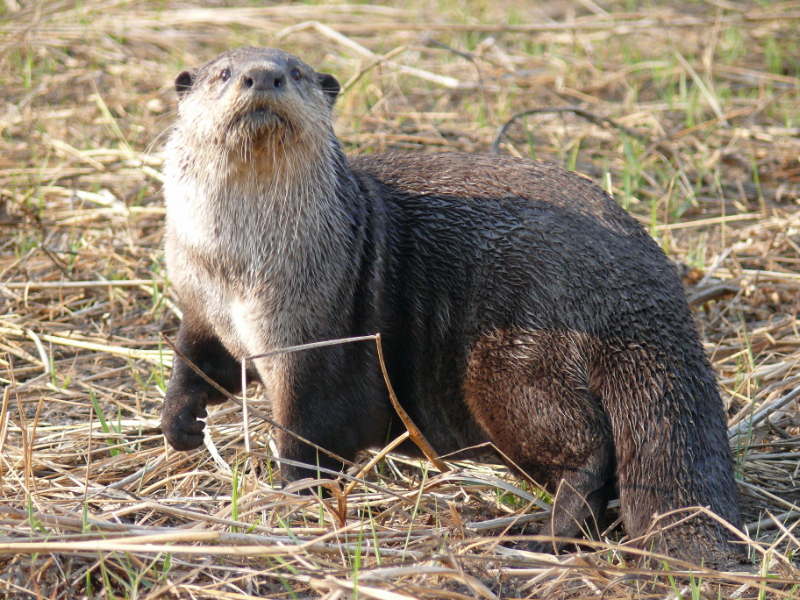
The Cape clawless otter, Aonyx capensis, belongs to the family Mustelidae the same family as stoats, badgers, and wolverines. Adults weigh between 10 and 21 kilograms. Body length reaches 73 to 95 centimetres with a thick, muscular tail of 41 to 67 centimetres. Dark chocolate-brown above and paler below, the otter carries a characteristic white chin, cheeks, and throat visible at a distance. The forepaws are the key identification feature: hand-like, with flexible fingers and no claws, they manipulate prey with far greater precision than the webbed, clawed forepaws of most otter species.
Hindpaws carry partial webbing supplying propulsion underwater. Forepaws handle prey gripping and feeling rather than swimming. This clear division of labour between forepaw and hindpaw functions is characteristic of the genus.
Diet: Crabs and Frogs Over Fish
Most otters worldwide specialise in fish. The Cape clawless otter does not. Freshwater crabs dominate the diet, alongside frogs, molluscs, aquatic insects, and small fish. Clawless forepaws feel into individual rock crevices and under submerged stones ideal for extracting crabs from their rocky shelters. After surfacing with a crab, the otter manipulates it with the forepaws to a consumable orientation and crushes the shell with broad, flat molar teeth.
This crab specialisation shapes habitat preference. Rocky rivers and lake shores with abundant crab populations and submerged rock shelters attract the highest otter densities. Rivers lacking substantial rocky zones hold fewer otters. Uganda’s river systems and Kenya’s highland streams both crab-rich support healthy populations.
Daily Activity Pattern
Cape clawless otters are primarily crepuscular and nocturnal most active at dawn, dusk, and through the night. Daytime activity occurs in undisturbed areas, but midday typically sends them to reed beds, root tangles, or dense riverside vegetation. Early morning boat safaris and evening river drives produce far more otter sightings than midday game drives along waterways.
On land, the otter moves with a characteristic bounding gait arching and stretching the flexible spine with each stride. Five-fingered tracks in muddy river margins mark its presence. The hand-like forepaw print is unique among East Africa’s mammals. Locating fresh tracks along a river bank and searching the adjacent water systematically is the most reliable strategy for finding individuals.
Range in East Africa
Cape clawless otters occur throughout East Africa wherever permanent freshwater with rocky substrates exists. Uganda’s Kazinga Channel, Queen Elizabeth’s rivers, Kenya’s highland streams in the Aberdares and Mount Kenya foothills, and Tanzania’s Mahale Mountains rivers all hold populations. Lake Victoria’s rocky shores produce dawn sightings.
Plan Your Safari
The Kazinga Channel boat safari in Uganda’s Queen Elizabeth National Park offers the most accessible Cape clawless otter encounters in East Africa. The boat passes rocky channel sections where otters hunt in the early morning. Kenya’s Aberdare rivers and the Tana River’s upper rocky sections near Mount Kenya also produce regular sightings on early morning drives or guided walks. Dawn timing is essential — detection probability drops as the morning advances.
African Wild Trekkers designs Uganda and Kenya safari itineraries with early start times that target crepuscular species. Contact us to plan a safari capturing East Africa’s freshwater wildlife alongside the savanna’s more famous inhabitants.