Sykes’ Monkey Kenya: The Forest Primate of Kenya’s Highland and Coastal Forests
Kenya’s forests are richer in primate species than most visitors realize. From the highland forests of the Aberdare to the coastal strip near Mombasa, different monkey species occupy each forest type. The Sykes monkey bridges multiple forest environments. It adapts from montane cloud forest to lowland coastal bush. It is Kenya’s most widespread forest monkey and one of the least studied.
What Is the Sykes Monkey?
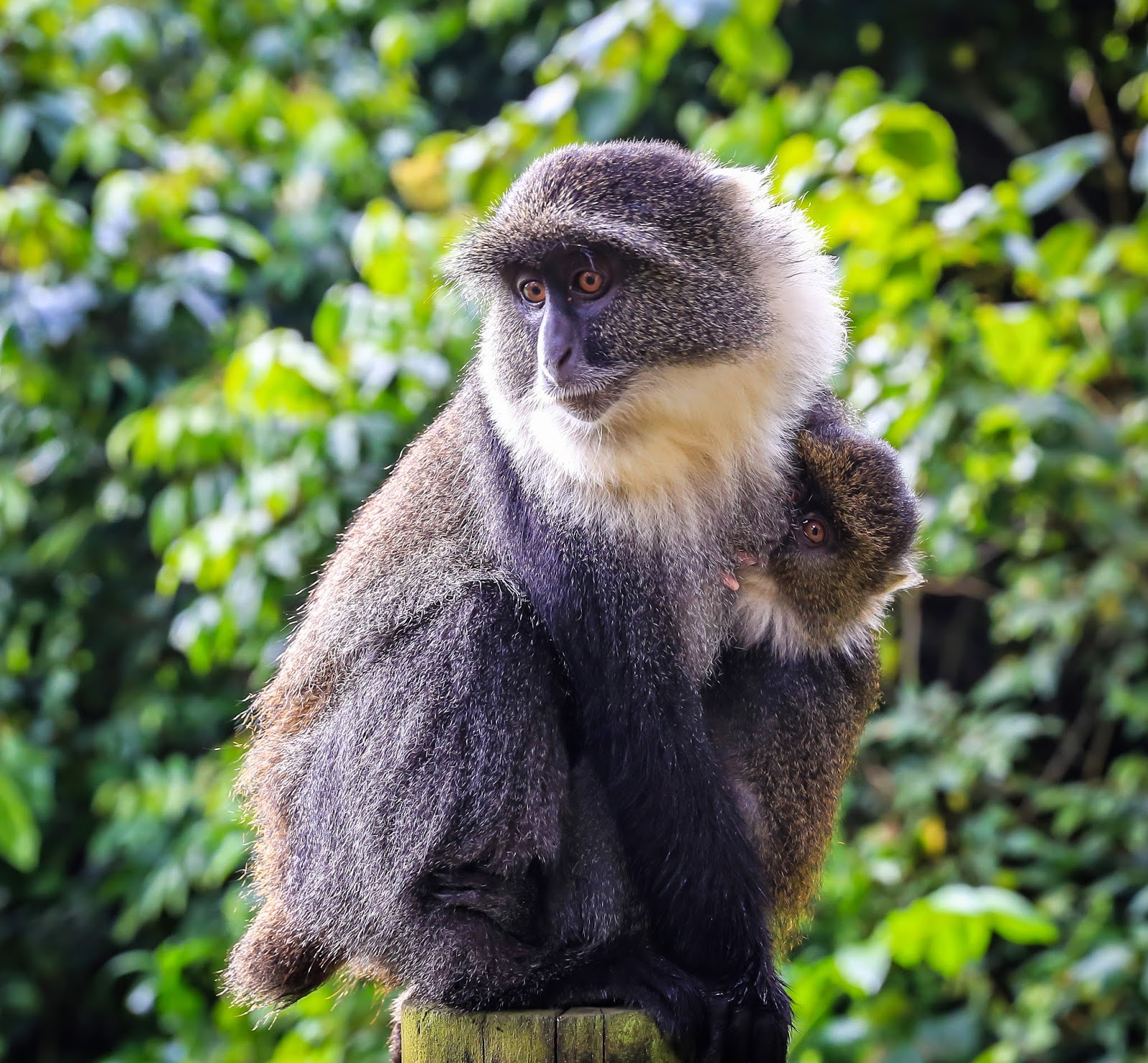
The Sykes monkey, Cercopithecus albogularis, is a member of the guenon family. It was long classified as a subspecies of the blue monkey. Genetic and morphological analysis elevated it to full species status. The common name honors William Henry Sykes, a British military officer and naturalist who collected natural history specimens in India and Africa in the nineteenth century.
An adult Sykes monkey weighs between 4 and 9 kilograms. Males are significantly larger than females. The coat is variable across the species’ range—generally dark olive-grey to brown above with a white or pale throat patch and lighter underparts. The face is dark with a black brow and slightly pale cheek area. The throat patch is the most consistent identification feature and gives the species its scientific name: albogularis means “white-throated.”
Subspecies Variation in Kenya
Several Sykes monkey subspecies occur in Kenya with different appearances. Kolb’s monkey subspecies of the Aberdare and Mt. Kenya forests has particularly blue-tinged facial skin and a more prominent white throat patch. The Zanzibar subspecies—which actually occurs on the Kenyan coast rather than Zanzibar—has slightly different coat tones. This subspecies variation across coastal and highland forms reflects adaptation to different forest environments over thousands of years of partial isolation.
Where different subspecies meet in intermediate forest zones, interbreeding occurs. Hybrid individuals show intermediate coat and facial characteristics. Identifying the “purity” of individuals in overlap zones requires genetic analysis. For safari purposes, the variation adds interest to encounters—eachorest zone has its own locally distinctive form.
Habitat and Range in Kenya
Sykes’ monkeys live in Kenya’s highland forests—the Aberdare National Park forests, Mt. Kenya’s lower forest zones, and the Cherangani Hills. They also occupy Kenya’s coastal forests—the Arabuko-Sokoke Forest near Watamu, the Shimba Hills forest south of Mombasa, and smaller coastal forest patches. The two populations are separated by the dry interior of Kenya, where forest is absent.
The Aberdare forest population is particularly well-established. The Aberdare’s tree hotels—Treetops and The Ark—attract wildlife to waterholes within the forest. Sykes monkeys are regular visitors to both waterhole areas, particularly at dawn and dusk. Groups forage around the forest edge near the waterholes before retreating into the interior.
Social Structure and Group Behaviour
Sykes monkeys live in one-male groups of 8 to 30 individuals. The single adult male defends the group and produces a series of calls that mark territory and coordinate group movement. Females stay in their natal group for life. Group territories in Highland forests average 30 to 50 hectares. In coastal forests, where food is more evenly distributed and competition lower, territories may be smaller.
Groups from adjacent territories interact at boundaries through calling and occasional visual displays. Physical contact between groups during territorial encounters is rare. The adult male does most of the boundary calling while females and juveniles move away from the boundary. All-male bachelor groups occasionally challenge resident males. Successful challenges are uncommon but do result in male takeovers of established groups.
Diet and Human Conflict
Sykes monkeys eat fruit, leaves, flowers, insects, and fungi. They raid crops and garden produce readily near forest edges. In the Aberdare forest margins and near Arabuko-Sokoke, they enter farms adjacent to the forest to eat maize, cassava, and garden fruits. This brings them into conflict with farming communities that tolerate the raids poorly. Control strategies include guard dogs and community patrols, neither of which fully prevents raiding by determined groups.
Plan Your Safari
The Aberdare National Park tree hotels offer outstanding Sykes monkey encounters in a unique setting. Watching a group of Sykes monkeys moving through the forest at dawn from the viewing deck of Treetops or The Ark, with elephants and buffalo at the waterhole below, is one of Kenya’s genuinely distinctive wildlife experiences. Kenya’s coastal forests—particularly Arabuko-Sokoke near Watamu—add coastal Sykes monkey watching to a beach and marine wildlife itinerary.
African Wild Trekkers designs Kenya safaris that include highland forests and coastal wildlife alongside the famous Maasai Mara circuit. Contact us to build a Kenya itinerary that covers the full range of the country’s wild places.