African Wild Dog Den Facts: The Underground Hub of Pack Social Life
When an African wild dog pack settles at a den site, the most extraordinary sustained wildlife observation in Africa becomes possible. The den is not just a birthing chamber it is the fixed point around which the pack’s entire social life organises for three to four months. Every key interaction concentrates here: pup feeding, greeting ceremonies, play sessions, hunt departures, return celebrations. All of it repeats at one location, accessible from a vehicle, day after day. Knowing a wild dog den’s location and spending time there produces a depth of wildlife understanding available almost nowhere else on the continent.
What Is a Wild Dog Den?
Wild dog dens are underground chambers for whelping and pup-rearing. The pack rarely digs its own den — it typically takes over an abandoned aardvark burrow, expanding the entrance tunnel if necessary to fit the alpha female. A suitable den needs multiple entrances for ventilation and escape routes. Firm soil that will not collapse is essential. Proximity to shade matters. A location offering some concealment while allowing the pack good visibility of surrounding terrain for predator detection completes the requirements.
The same den site may serve the same pack across multiple breeding seasons. Alternatively the pack may shift to a new site each year if the previous site was disturbed or if predator pressure grew too high. Botswana and Zimbabwe wild dog populations show den site fidelity over multiple years. In Tanzania’s Selous, where pack home ranges are very large, dens are not reliably reused year to year.
Denning Season and Whelping
East Africa’s wild dog packs typically den between April and August the dry season, when hunting conditions are good and low vegetation allows efficient pursuit hunts near the den. The alpha female gives birth to a litter of 6 to 16 pups after a 70-day gestation. Litters of 10 to 12 are common the largest litter of any carnivore relative to adult body size.
The alpha female stays in the den with pups for the first 3 to 4 weeks. Pack members that hunt during her confinement regurgitate food for her on their return. Every pack member contributes even the lowest-ranking individuals feed the alpha female and, once pups emerge, the pups themselves.
Pup Emergence and the Helper System
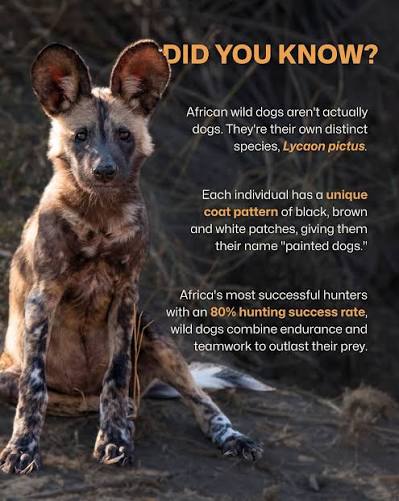
Pups emerge from the den between 3 and 4 weeks old small, dark-furred, stub-nosed versions of the adults, already developing the individual coat patterns that will mark them for life. Returning hunters sprint back to the den with tails thrashing and entire bodies wriggling. Pups mob them immediately for regurgitated food. This greeting is among the most energetic and emotionally resonant wildlife events in Africa.
Every adult pack member is a helper. Individuals take turns standing guard at the den while the rest hunt. All regurgitate food for pups that approach. All play with pups that emerge and tumble over their feet. This helper system means that even one successful breeding pair in a pack of eight can raise a large litter the collective investment of helpers substitutes for what two parents alone could never provide.
When Den Observation Is Possible
Den-based wild dog observation is the finest predator watching experience in Africa. The morning hunt departure — the pack rallies, spins, vocalises, touches, then streams out at a run — repeats every day for three to four months. The post-hunt return, with pups tumbling over each other to mob the food-laden adults, is equally compelling. Three or four days at one active den produces a documentary-level understanding of the individual animals and their relationships.
Plan Your Safari
Tanzania’s Nyerere National Park and Zimbabwe’s Mana Pools are the two most reliable locations for den-based wild dog observation in Africa. Nyerere’s open woodland and large pack population make it the most accessible from East Africa. When a den is active, specialist guides spend multiple days at the site. The accumulation of observation over three or four days at one den transforms the experience entirely.
African Wild Trekkers monitors wild dog den activity across Tanzania and designs safaris around active dens during the denning season. Contact us to plan a wild dog safari built around the den experience.