African Civet Facts: The Spotted Omnivore of East Africa’s Night
The African civet ranks among the most commonly encountered mammals on East Africa night drives and among the least watched. Guide vehicles slow, someone says “civet,” and the vehicle moves on in seconds. This animal deserves far more attention. Its lineage the viverrid family diverged from other carnivore families over 40 million years ago. Highly adaptable and ecologically distinct, the civet carries one of the most complex body patterns of any East African mammal.
What Is the African Civet?
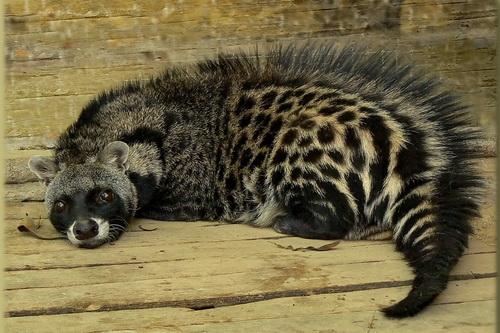
The African civet, Civettictis civetta, is the largest viverrid in Africa. Adults weigh between 7 and 20 kilograms. Body length reaches 67 to 84 centimetres, with a tail of 40 to 51 centimetres. A complex pattern of black spots and stripes covers the grey-to-tawny ground colour. A black face mask frames the eyes. The muzzle is pale. A dorsal crest of erectile black-and-white hair runs from the neck to the tail base when the crest rises in alarm, the apparent body height nearly doubles.
Black legs and a grey-and-black banded tail with a black tip complete the look. The overall impression is of an animal with too many patterns yet this apparent chaos works as disruptive camouflage in the dappled light of the forest floor and bush margins where the civet forages.
Omnivore: The Broadest Diet of Any East African Carnivore
The African civet eats almost everything. Documented food items include rodents, birds, eggs, frogs, snakes, millipedes, beetles, termites, fallen fruit, berries, roots, carrion, and human refuse. Millipede digestion is a notable civet speciality highly toxic to most other mammals, millipedes cause no harm to the civet gut. In areas where millipedes are abundant, they form a significant part of the diet.
This omnivory lets the civet exploit food sources no specialist carnivore can access. It fills a scavenging and forest-floor insectivore role simultaneously. Caloric flexibility allows survival through habitat changes and seasonal fluctuations that would challenge a more specialised feeder.
Civetone and Scent Communication
The African civet produces civetone an intensely scented secretion from a large perineal gland between the hindlegs. Historically, captive civets provided this musk as a base fixative in perfumery across Europe and Asia. Early versions of Chanel No. 5 contained it. Modern synthetic alternatives now replace most civet-derived civetone in commercial use, though civet farming for musk continues in Ethiopia.
In the wild, civetone marks territorial latrines communal defecation sites where multiple individuals deposit scent-marked droppings. These latrines act as communication hubs, conveying identity, reproductive status, and territory occupancy to other civets. Each latrine accumulates droppings at the same location over time.
Nocturnal Habits and Range
Strictly nocturnal, the African civet rests in dense vegetation during the day in grass clumps, under boulders, or inside termite mounds. After dark it follows regular foraging routes through its home range, using smell to locate food. Sub-Saharan Africa from Senegal to South Africa falls within its range, excluding only the most extreme deserts. East Africa’s forest edges, bush, and tall grass near water all support civet populations.
Plan Your Safari
Night drives in any East Africa national park or conservancy that permits them produce African civet sightings regularly. Kenya’s Laikipia conservancies, Tanzania’s Ruaha and Selous lodges, and Uganda’s Queen Elizabeth all offer guided night drives. Civets walk along roads and tracks, or sit feeding on fallen fruit near fruiting trees. A handheld spotlight held low produces the best results orange-red eye-shine appears at 40 to 60 metres.
African Wild Trekkers selects safari accommodations with night drive programmes where relevant. Contact us to plan an East Africa safari that captures the full nocturnal ecosystem alongside the day’s big game.